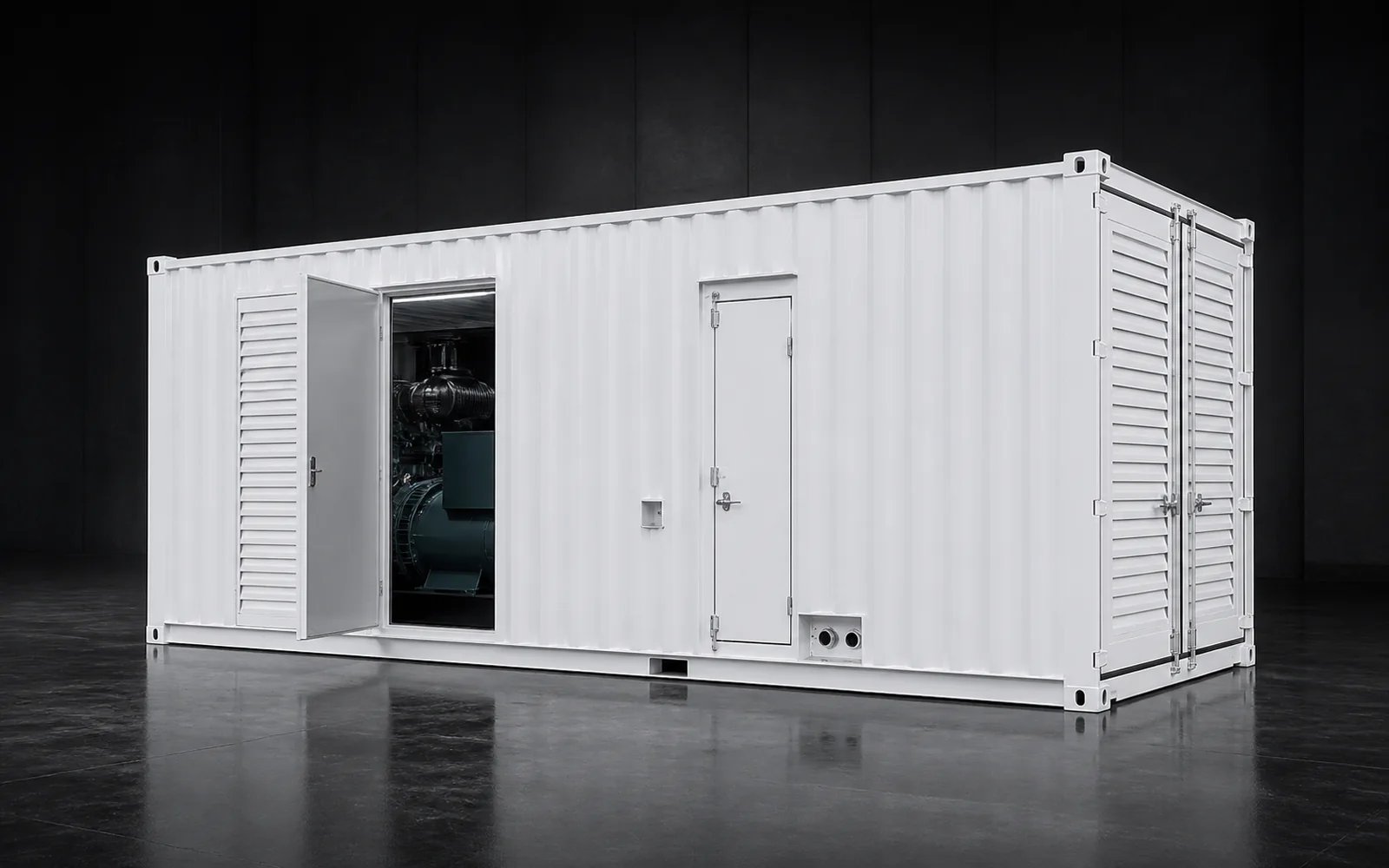
Ordering a generator from an overseas factory is not the same as ordering one across town. The unit leaves a production base, crosses an ocean, clears customs and still has to start on the day you need it - months after you paid. This guide covers what actually happens between your deposit and the set landing at your site, how to verify the packing and lead time before you commit, and the red flags that mean you should walk away from an export quote.
What actually happens between paying a deposit and the generator landing at my site?
This is the part most first-time importers underestimate. A typical flow runs engineering confirmation and drawing approval, material and engine procurement, production and factory acceptance test, packing and crating, inland haul to the port, ocean freight, destination port clearance, and final delivery to your site. Each step has its own clock, and the total is almost never the production time alone. A containerized or trailer set can ship as a near-complete package; an open set needs a protected crate and careful blocking. The practical move is to ask the supplier for the full milestone plan with dates attached to each stage, and treat 'lead time' as the whole chain rather than the build alone.
Does 'FOB' or 'CIF' mean my supplier handles the risky part?
Only partly, and the boundary is where claims get lost. Under Incoterms 2020 - the ICC revision most international trade uses - EXW leaves almost everything to you; FOB means the seller delivers the goods on board the vessel at the named port, so risk passes to you at the ship's rail; CIF adds insurance and freight to the destination port, but risk still transfers to you when the goods are on board at the load port, not when they arrive. Many buyers read 'CIF' as 'the supplier is responsible until it reaches me' - that is wrong. Confirm the Incoterm, the named ports, and which party arranges cargo insurance and covers loss in transit, then put it in the contract. A quote that just says 'we ship worldwide' with no Incoterm is not enough to protect you.
How do I verify the crate will survive ocean freight?
You verify it before it leaves the factory, not after it arrives damaged. A practical checklist: (1) Require a packing method statement - how the set is blocked and braced, what corrosion protection is used, and whether it is rated for outdoor or only covered storage at the port. (2) Confirm the transport mode: most sets go in a 20 ft or 40 ft container or on a flat-rack; ask which, and whether the gross weight and dimensions fit your destination handling. (3) Demand photos of the actual crate for your serial number before shipment, not a generic brochure shot. (4) Require the IP and acoustic ratings your site needs as supporting documents and write the targets into the contract - a sealed enclosure helps, but the tested figure is what protects you. (5) Ask who inspects the packing and keep the inspection note. Our production base documents the crating per unit and photographs it against the serial number, which is the standard we expect every export supplier to meet.
How do I verify the lead time before I commit?
Pin it in writing, with consequences. Ask for the confirmed production lead time from drawing approval to ex-works, the earliest vessel window, and the total to your named port - then require all three in the contract with a late-delivery clause. Lead time shifts with engine brand and configuration, and with season, so '4 to 6 weeks' with no date is not a commitment. For project work, also confirm the quantity you need and the minimum order logic, and ask whether the supplier holds buffer stock for your engine choice. LINKPOWER builds to the confirmed project rather than from a fixed shelf, so the realistic window is set after the load list and duty are fixed - get that number in the quotation and the contract, not in a chat message.
When should I walk away from an export generator quote?
Walk away, or at least pause, if the supplier: will not name an Incoterm or puts 'we handle shipping' with no responsibility split in writing; refuses to provide a packing method statement or crate photos for your serial; gives a lead time with no date and no late-delivery remedy; is vague about the destination-market conformity marks your country requires and offers only 'no problem, it's certified' by word of mouth; has no export documentation track record and cannot show a previous bill of lading or certificate of origin template; or will not state a spare-parts or service response plan for your region. A supplier that exports regularly answers these in one email. One that cannot is showing you the risk before the container sails.
How LINKPOWER handles export
LINKPOWER supplies open-type, silent, mobile-trailer and containerized diesel sets with Weichai, Yuchai and SDEC engines, configured to the project and packed for the journey rather than the showroom. Containerized and trailer packages are built to travel as complete units; crating, blocking, corrosion protection and port documentation are part of the shipment, and the factory acceptance test runs against the step load you specify before anything is crated. For export, the document set - test reports, ratings data, packing list, certificate of origin template and the conformity files your destination market expects - is assembled with the order, not added after. Before you commit, ask for the packing method statement, the confirmed milestone plan with dates, and the nearest service point; those three answers reveal more about delivery reality than any freight photo. See the factory capabilities, the containerized range and the infrastructure application page: https://linkpowergenset.com/en/factory/ , https://linkpowergenset.com/en/products/containerized-power-system/ and https://linkpowergenset.com/en/applications/infrastructure/.
FAQ
Which Incoterm is safest for a first-time importer? There is no single 'safe' term; it depends on who controls the freight and the insurance. CIF gives you less to arrange, but risk still passes at the load port; FOB lets you choose the forwarder. Decide based on your freight experience, then write the named ports and responsibility split into the contract. Ask your freight forwarder rather than guessing.
Do I need a certificate of origin, and what does it prove? A certificate of origin states where the goods were made; customs uses it for clearance and it may affect duty. It proves origin, not product performance or conformity - keep that distinction clear and request the conformity documents separately.
How are generator sets usually packed for export? Most travel in a standard container or on a flat-rack with blocking, bracing and corrosion protection; the exact method depends on the package type and your port handling. Demand the method statement and photos for your unit instead of assuming.
What we need from you
Send the load list, duty (standby, prime or continuous), target frequency and voltage, destination port, required conformity marks for your market, and the date you must have it on site. We will confirm the configuration, pack it for the route, run the factory acceptance test against your step load, and return a quotation with the milestone plan and the document set - Incoterm, lead-time dates and service footprint stated up front. For an export project, begin here: https://linkpowergenset.com/en/products/ and https://linkpowergenset.com/en/factory/.