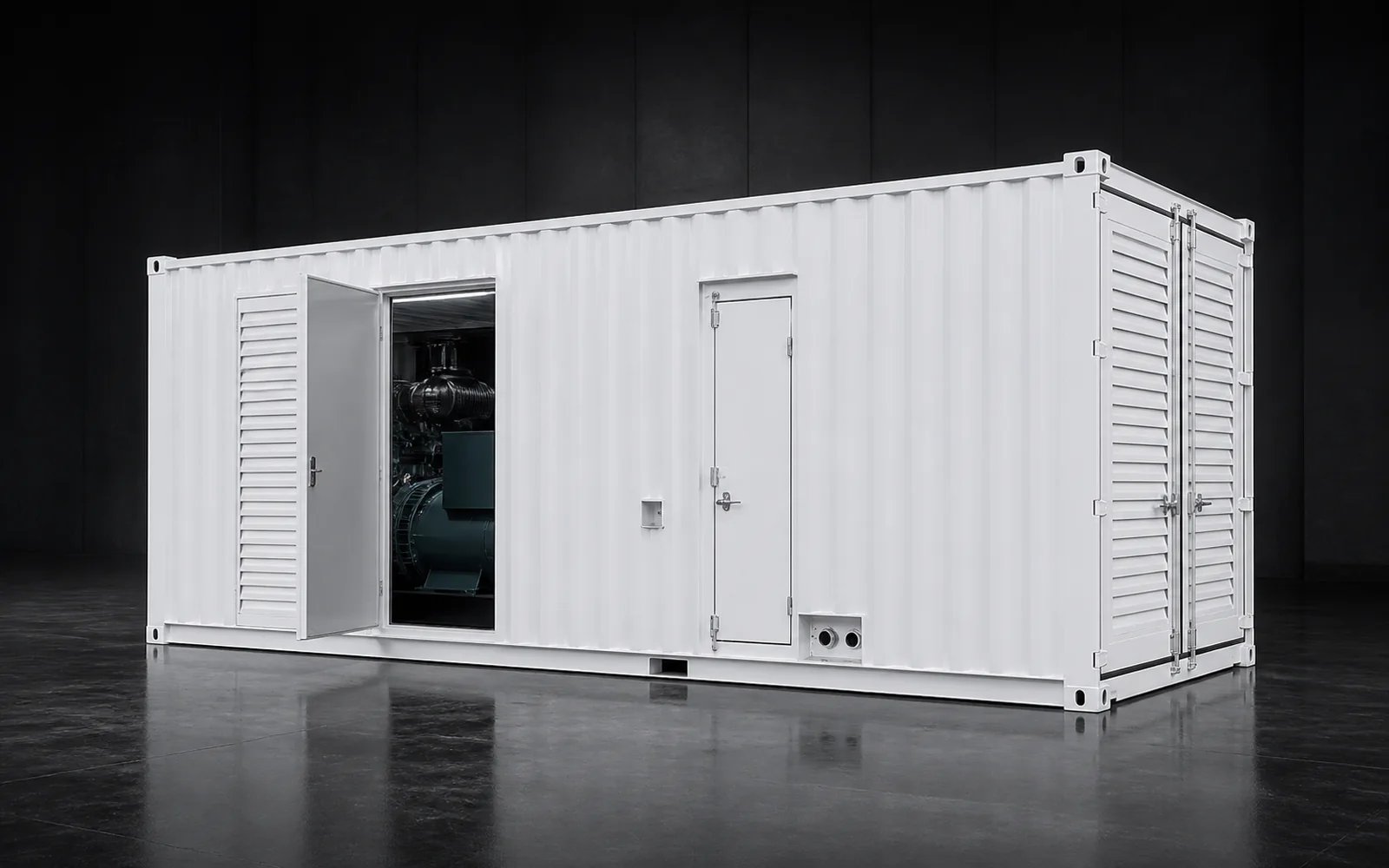
On 2026-11-02 the day's power-industry headlines were grid, solar and battery stories - none about the diesel generator sets that still carry mines, hospitals and construction sites when the grid fails. What those stories skip is the question that actually stops a shipment at the port: which emissions stage applies to the set you are importing, and can your supplier prove it on paper? This guide explains what an emissions stage is, why a 'Stage V' sticker is not the same as clearing your destination's customs, and the documents you must see before you pay and ship.
What does an emissions stage actually mean for a diesel generator?
An emissions stage is a regulatory ceiling on the pollutants a non-road diesel engine is allowed to emit, set by the market where the machine will operate - not by the factory that builds it. The big programs are real and dated: the EU's Stage V for non-road diesel (Regulation (EU) 2016/1628) took effect from 2019 for most power bands; the US EPA Tier 4 program (40 CFR Part 1039) phased in between 2008 and 2015; China's NR-IV (GB 20891) rolled out from 2016; and India runs CPCB II and CPCB IV. Each has its own limits, test cycle and power-band thresholds, and the exact figures change with the band - so the certificate, not a brochure line, is what states the number your set met.
One thing buyers confuse: the stage is granted to an engine family through a type-approval test, not handed to a finished genset by default. A certificate that says 'Stage V' covers that engine family at that rating; it does not automatically cover the aftertreatment, the fuel you burn, or the exact set configuration you receive. Where your market requires it, the installed genset needs its own conformity or import documentation that ties back to that engine certificate.
Does a supplier's 'Stage V' or 'Tier 4' label mean my unit clears customs?
Usually not by itself, and this is where units get turned back. Emissions certification is engine-family-level and market-specific: a set certified to EU Stage V is not accepted under US EPA Tier 4, and a 'Tier 4' claim in a market that applies CPCB IV means nothing to that authority. What 'Stage V' actually certifies is that the engine family met the limit at type-approval - it does not certify the specific set you receive, does not mean your destination accepts it, and does not mean the installation (aftertreatment, fuel, tuning) is unchanged from the certified unit. Customs or the local authority may demand the type-approval certificate, a conformity declaration, and sometimes local in-service testing, and many rejections happen because the paperwork names the engine but not the exact genset shipped, or the certificate has lapsed for that power band.
How do I verify the emissions stage before buying and shipping?
Put these on the RFQ and treat a vague 'meets Euro V' as a fail: (1) Name the destination market and its applicable program - EU Stage V, US EPA Tier 4, China NR-IV, India CPCB, or your local rule - and confirm it with your importer or the authority, because the requirement is set by where the set lands. (2) Ask for the engine's type-approval certificate against that exact standard, showing the power band and the limit met, and confirm it is current for that band. (3) Match the certificate's engine model and rating to the exact genset you are buying - a certificate for a different variant does not cover yours. (4) Require a conformity or declaration document that ties the finished genset, not just the bare engine, to the certification where your market requires it. (5) Write the applicable stage, standard, limit and document duty into the contract, with the supplier liable for rejection costs if the papers do not match. (6) Where your market runs import or in-service testing, agree who arranges and pays for it before the set leaves the factory. (7) LINKPOWER builds sets on Weichai (https://linkpowergenset.com/en/products/weichai-diesel-generator/), Yuchai (https://linkpowergenset.com/en/products/yuchai-diesel-generator/) and SDEC (https://linkpowergenset.com/en/products/sdec-diesel-generator/) engines, configures them to the destination's stated requirement, and supplies the matching engine type-approval and conformity documents with the order so the paperwork travels with the set, not after it (https://linkpowergenset.com/en/factory/).
When should I walk away from an emissions claim?
Walk, or stop the order, if the supplier can only say 'meets Euro V' without naming the standard, power band and rating. Walk if they show a certificate for a different engine model or rating than the one quoted, or one that has expired or does not cover your band. Walk if they refuse to put the stage, the standard and rejection liability in the contract. And walk fastest from anyone who claims 'global compliance' or 'worldwide emissions approved' - no single certificate covers every market, and the claim itself tells you they have not read your requirement. Any one of these missing in writing is enough to risk a set sitting at the port while demurrage climbs.
The practical takeaway
Emissions compliance is set by the destination, proven by a certificate that names your exact configuration, and locked in by a contract that assigns rejection risk. The engine certificate is not the same as set acceptance - get the document that ties the finished genset to the certification, and confirm the band and rating match what you are shipping. Read how export paperwork and Incoterms fit the same order (https://linkpowergenset.com/en/news/verify-generator-export-shipping/) and how fuel choice changes what you must certify (https://linkpowergenset.com/en/news/diesel-vs-hvo-generator/). LINKPOWER supplies diesel generator sets on Weichai, Yuchai and SDEC engines across open, silent, mobile and containerized formats, configures each set to the buyer's stated market, and ships the applicable type-approval and conformity papers with the unit so compliance is verified before it reaches the border, not argued after (https://linkpowergenset.com/en/products/) (https://linkpowergenset.com/en/factory/).
FAQ
Is EU Stage V the strictest, so meeting it covers every market? No. Stage V applies only in the EU/EEA; other markets run their own programs with different limits and test cycles, and several still accept older stages. Meet the destination's requirement, not the strictest one you have heard of - over-certifying does not open a market that does not require it.
Do HVO or natural gas sets avoid the emissions rules? No. Changing fuel shifts some pollutants but the set still falls under the applicable non-road program, and certification is fuel-specific. Verify the engine's certificate for the exact fuel you will burn, because a diesel-certified unit is not automatically certified to run on HVO or gas without the matching approval.
Who pays if customs rejects the set for emissions? That depends on the contract and the Incoterms you agreed. If you shipped without confirming the requirement and the documents, the cost usually lands on you. Put the liability and the document duty in writing before the set leaves the factory so a rejection is a supplier problem, not a surprise on your dock.
What we need from you
Send the destination country, the fuel you will burn, the rated power and the duty (standby or prime) with expected run hours. We confirm the applicable program, supply the matching engine type-approval and conformity documents, and write the stage and rejection liability into the contract so the set is verified before it ships. Start from the full product range (https://linkpowergenset.com/en/products/) and the factory build and test process (https://linkpowergenset.com/en/factory/), or browse the applications we configure for (https://linkpowergenset.com/en/applications/infrastructure/).