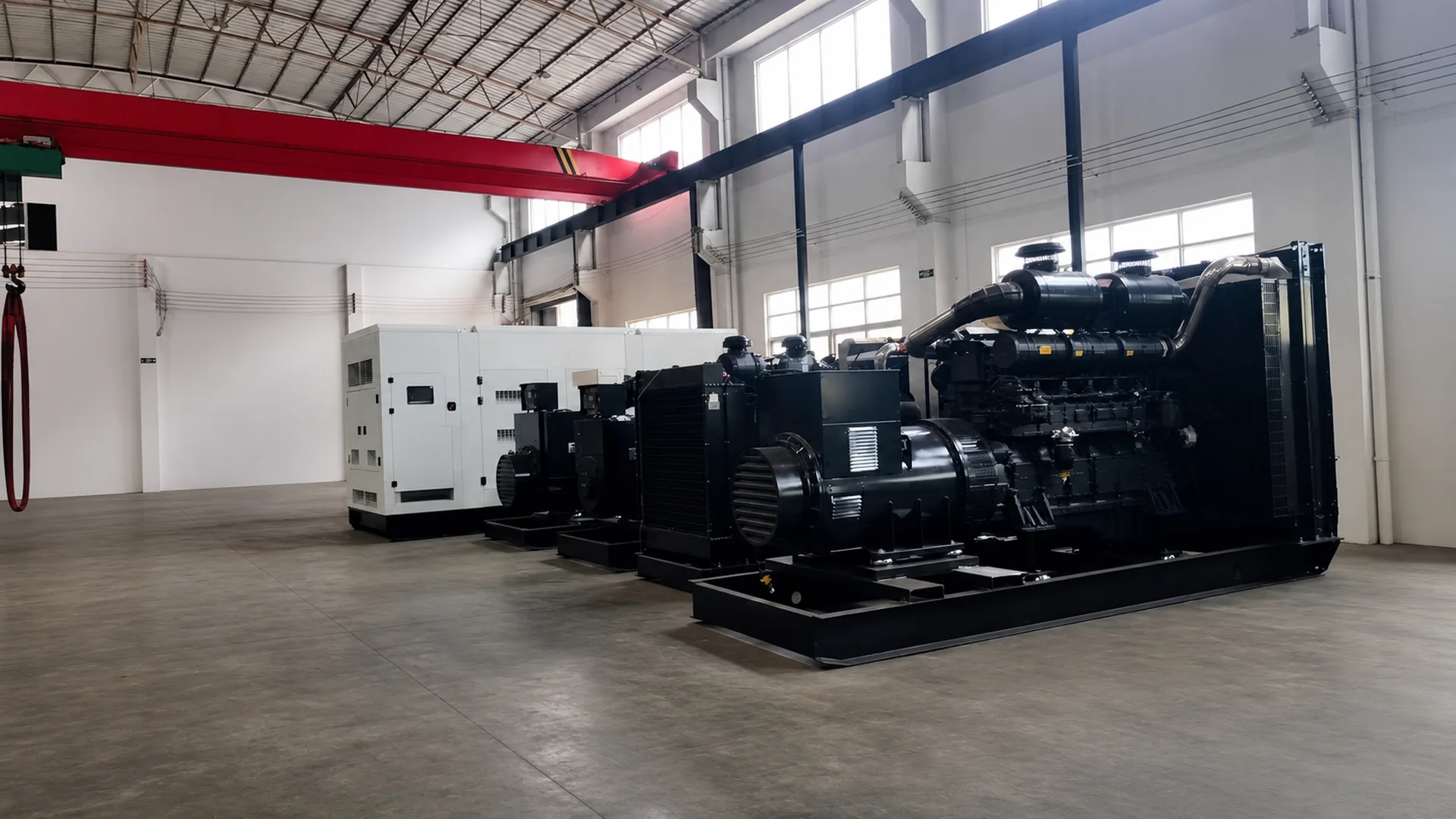
A generator that runs perfectly on the supplier's video and dies on your site is not a backup power source. It is a liability you paid ocean freight to receive. The only thing that separates a set that works from one that merely looks finished is a documented test against the load it will actually carry. This guide walks through how to verify that test before the container closes.
What does 'tested' actually mean for a generator set?
'Tested' has no single meaning, and the word alone proves nothing. ISO 8528-6:2023, the international standard for generating-set test methods (ISO, published November 2023), sets out how to characterize a complete set - but it also states that the manufacturer is responsible for specifying which characteristics and which tests are performed. In practice, 'tested' can mean anything from a few seconds of no-load running to a full load-bank run at rated power with stepped loading and protection checks. Ask what was actually done, not whether the unit was 'tested'.
Does a 'factory acceptance test' mean my exact set was load-tested at rated power?
Usually not by default, and you should never assume it. A set can leave the factory having only run unloaded, or at a fraction of its rating, with no record of the load it carried. The only evidence that your specific unit held its rated load is a dated test report that names your serial number and lists the load steps, voltages and frequencies measured. If the report shows a generic model range instead of your serial number, it is a brochure, not an acceptance record.
How do I verify the test before I pay?
Put the test scope in the purchase order so it is contractually owed, not a favour. A practical checklist: (1) Specify the load steps in writing - typically incremental steps up to and including rated load, plus any overload step your rating standard allows - and the dwell time at each step. (2) Request the FAT report naming your serial number, with measured voltage, frequency, load and any protection trips. (3) Ask which standard the test references (ISO 8528-6 or the applicable national or regional standard) and request the documented test procedure. (4) Request to witness the test on site, or by live video, and keep the recording. (5) For noise, emission stage and ingress-protection rating, ask for the measurement or certification report and write the limit you require into the contract - a verbal 'it's compliant' is not acceptance. (6) Keep the report; it is your baseline for commissioning and any later warranty or performance claim.
When should I walk away from a supplier's test claim?
Several signals mean the 'test' is decoration. Walk away, or at least pause, if the supplier: has no written test procedure and will not put test scope in the PO; refuses to state the load steps performed or the rated load actually carried; cannot produce a report tied to your serial number; will not allow a witness or a recorded video of the run; or is vague about which standard applies, or claims a certification (CE, an emission stage, ISO) without the document to back it. A supplier confident in its test bench answers these in one email. One that cannot is telling you what you need to know.
What a proper factory test covers - and what it does not
A solid FAT checks engine start, voltage and frequency build-up, steady-state behaviour at each load step, the voltage and frequency dip when load is applied, overload capability as defined by the rating standard, and that protection devices trip correctly. It does not replace site commissioning, fuel-system integration, or the inspections your local authority requires. Open, silent, trailer and containerized sets can all be load-tested; very small portable sets may only get a no-load check, so confirm the scope for your unit. The test proves the set leaves the factory capable - your site work proves it stays capable.
How LINKPOWER handles acceptance testing
LINKPOWER builds open-type, silent, mobile-trailer and containerized sets with Weichai, Yuchai and SDEC engines, configured to the project rather than pulled from a shelf. Acceptance testing is carried out at the production base against the step load you specify, and the FAT record is issued with the shipment. For export projects the documentation package - test report, ratings data, and the documents your destination market expects - travels with the unit. Before you commit, ask for the FAT record template, the nearest service point and the spare-parts lead time; those three answers tell you more about post-sale reality than any brochure. See the full product range and the factory capabilities here: https://linkpowergenset.com/en/products/ and https://linkpowergenset.com/en/factory/.
FAQ
Can I witness the test if I cannot fly to the factory? Yes. Most suppliers can run the test on a live video call and send you the recording. Put 'witness by video, recording supplied' in the PO so it is owed, not optional.
What load steps should I ask for? Agree the sequence in the purchase order. A common practice is incremental steps (for example 0, 25, 50, 75, 100 percent) up to rated load with a stated dwell at each, plus any overload step your rating standard defines. Require the actual measured numbers in writing rather than accepting 'standard test' as the answer.
Who pays for a witnessed or recorded FAT? That is a commercial term, not a technical one - negotiate it and state it in the contract. For a batch, witness one unit and require a per-unit report for the rest, or agree a statistical inspection plan with the supplier.
What we need from you
Send the load list, the duty (standby, prime or continuous), the site conditions, the step load you want proven, and your local noise and emission limits. We will configure the package, run the factory acceptance test against your step load, and return the report with a project quotation - service footprint and spare-parts lead time stated up front. For construction and infrastructure projects, start here: https://linkpowergenset.com/en/applications/construction/.