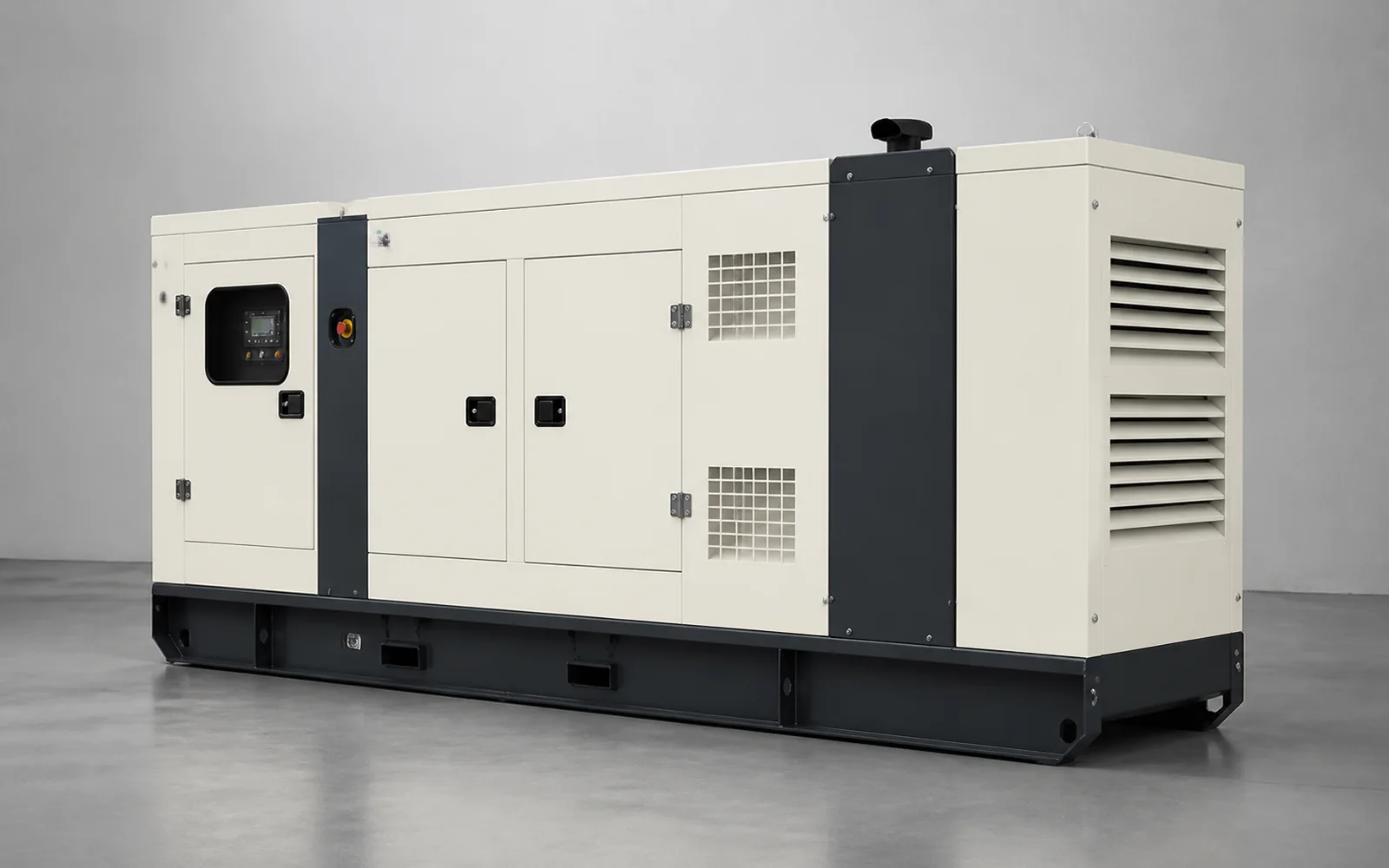
Telecom networks fail quietly when the power does. A cell site with no backup drops every call and data session it carries the moment the grid goes down, and the penalty is not just lost revenue - in many markets it is a regulatory breach with reporting obligations attached. That is why operators and tower companies treat backup power as core infrastructure rather than an afterthought. Diesel generator sets remain the workhorse for keeping transmission, cooling and site lighting alive through an outage, and for off-grid or weak-grid sites they are often the primary source. This guide covers how to specify generator backup power for telecom sites - cell towers, BTS hotels and remote comms - and the verification points that keep a remote site dependable.
Why a cell site needs its own power
Most towers sit where the grid is least reliable: hilltops, rural fringes, remote highways and disaster-prone coasts. The equipment inside - radio units, baseband, air conditioning, battery chargers and security - draws a steady load around the clock and cannot tolerate a long interruption. Where the grid is present, the generator is standby: batteries bridge the switchover, the set starts on loss of mains and carries the site until utility power returns. Where the grid is absent or too weak, the set runs as prime power for long stretches. Either way, the first question for a buyer is the duty and the load profile, not the brand: https://linkpowergenset.com/en/applications/telecom/.
Picking the package for a tower or BTS hotel
Telecom sites come in two shapes that change the package. A single tower or shelter is a compact, predictable load - often served by a silent (acoustic-enclosure) set sized to the site load, because towers frequently sit near homes or roads where noise draws complaints. A BTS hotel or aggregation site, where several operators colocate their equipment, carries a much larger and more critical load and often suits a containerized set with tank, controls and step-up built in, or a pair of sets for redundancy. For disaster restoration or temporary coverage during an event, a mobile trailer set lets a crew reposition power without a crane. Open-type sets still have a place inside an engineered equipment room where ventilation and attenuation are part of the building. Match the package to the site type and the redundancy you require: https://linkpowergenset.com/en/products/silent-diesel-generator/ , https://linkpowergenset.com/en/products/open-type-generator/ , https://linkpowergenset.com/en/products/containerized-power-system/ and https://linkpowergenset.com/en/products/mobile-trailer-generator/.
Fuel, theft and the remote-site reality
Remote towers live or die by fuel logistics. A set with no fuel plan is just dead weight on a hilltop, so size the day tank and any bulk storage from the load and the realistic refill interval, and ask how the supplier packages fuel storage for a trailer or container set. Theft is a real operating cost at unattended sites: lockable enclosures, bunded tanks and fuel-level monitoring turn a vulnerability into a managed risk. The same verification discipline applies to the ratings buyers often assume - the as-measured noise figure at the enclosure and at the site boundary, the ingress-protection rating the enclosure actually carries, and the emission-stage certificate your market requires. Request those documents up front and write the requirements into the contract; a verbal assurance is not a compliance record. The full generator range, by power band, is here: https://linkpowergenset.com/en/products/.
What to put in the RFQ for a telecom generator
State the duty (standby for grid-backed sites, prime for off-grid), the site load with the largest motor or compressor starts, voltage and frequency for the market (50 Hz or 60 Hz), the ambient temperature, the required noise limit at the boundary, the fuel autonomy target, and whether remote monitoring or an automatic transfer switch is needed. Specify the package you want - silent, open, container or trailer - and ask the supplier to confirm the configuration and run the set under load before it ships. Sets that are built, wired and load-tested as complete units at the factory arrive as known quantities rather than puzzles, which matters when the nearest technician is hours away: https://linkpowergenset.com/en/factory/. Small shelter sites often fall in the compact power bands, so review the size ranges with the supplier: https://linkpowergenset.com/en/products/20-100-kva-diesel-generators/.
FAQ
How long should a telecom site run on generator? For a grid-backed standby site, autonomy of a day or more is common so a single fuel delivery covers a multi-day outage; for an off-grid prime site, the question is the continuous fuel supply plan rather than tank size alone. Ask the supplier to size the tank from your load and realistic refill interval, and confirm how the set signals low fuel.
Silent or open for a cell tower? If the cabinet or enclosure sits in a populated or noise-sensitive area, a silent set is the safer choice because the acoustic enclosure controls the boundary noise. If the generator lives inside a building or equipment room already designed for ventilation and attenuation, open-type is cheaper to buy and service. State the noise limit and let the package follow.
Can one generator serve several carriers? At a BTS hotel or colocation site, yes - size the set from the total combined load and the redundancy you need, and confirm with the supplier whether a single large set or two sets in parallel best meets the availability target. If any scenario connects generation to the utility, verify the local interconnection requirements before you buy.
Planning backup power for a cell site, BTS hotel or remote comms node? Send LINKPOWER the site load, the duty and the environment, and you get a configuration - silent, open, container or trailer sets on Weichai, Yuchai or SDEC engines - sized for your market frequency, noise-limited for the location, fuel-planned for the refill log, and load-tested before it leaves the factory. Export documentation and commissioning support are quoted up front. Start from the applications overview to see how similar sites are powered: https://linkpowergenset.com/en/applications/ and https://linkpowergenset.com/en/applications/telecom/.