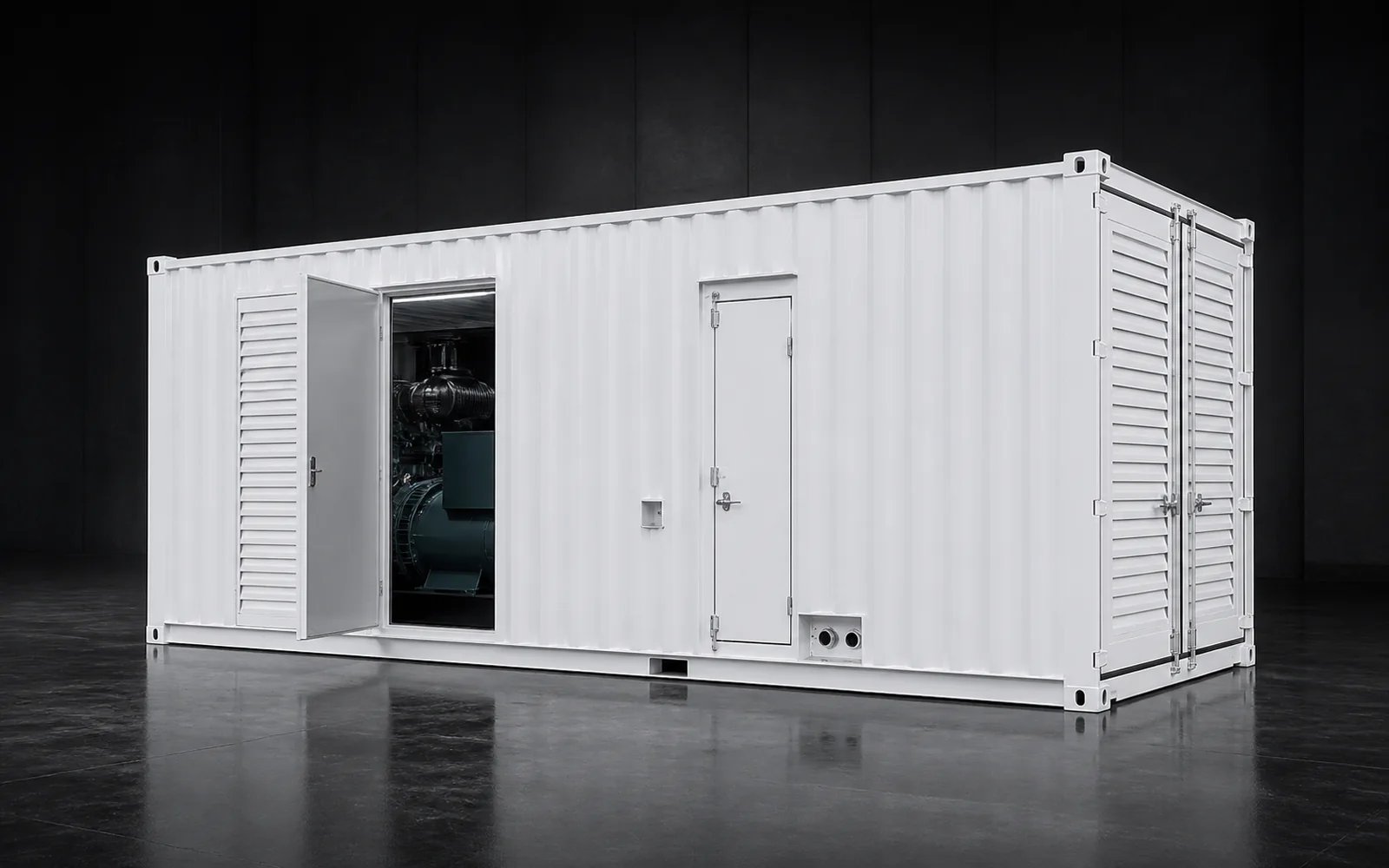
A mine is one of the hardest places you can put a generator. The grid often ends tens or hundreds of kilometers short of the pit, diesel logistics are measured in tanker loads, and the air itself is working against the machine - dust in the intake, less oxygen at altitude, ambient temperatures that turn a radiator rated at 45°C into a marginal one. Buyers who treat a mining power installation like a factory backup almost always find out the hard way. Here is how to specify a set that actually survives the site.
Start from the mine's load curve, not a catalogue kVA
Mining loads are lumpy. A crusher draws several times its running current at start, conveyors ramp in sequence, dewatering pumps run on level demand, and the camp adds a morning and evening peak that has nothing to do with the process. Build the load profile in time slots across a full day, mark the largest motor start, and note how long the site expects to run - months of continuous operation is normal, not an exception. That duty expectation decides the rating basis. A standby-rated set is not built to carry a processing plant for 5,000 hours a year; prime-rated machines are. If the duty is long and continuous, say so explicitly in the RFQ and ask the supplier to confirm the rating against the manufacturer's own definitions - never accept a nameplate kVA figure on its own. See the mining application notes: https://linkpowergenset.com/en/applications/mining/.
Altitude, heat and dust take real capacity away
Engine and alternator ratings are quoted at reference conditions - typically sea level and a moderate ambient. Go up the mountain or into the desert and the effective output drops: thinner air starves the combustion and the cooling, high ambient reduces radiator margin, and heavy dust loads choke the air filter faster than any test bench predicts. The exact correction is engine-specific, so the correct move is to hand the supplier your site altitude, design ambient temperature and dust exposure, then ask for the derated output in writing at those conditions - not a generic derate table. The same applies to filtration and cooling packages: pre-cleaners, heavy-duty air filters and oversized cooling are standard options for mining duty, and they are far cheaper to fit at the factory than to retrofit at 4,000 meters.
Package: containerized for fixed plants, mobile for moving work fronts
At a fixed process plant or a long-life camp, a containerized system is usually the practical answer. Engine, radiator, fuel tank and often the switchgear live in one weatherproof, transportable box that can be craned in, connected and running with a minimum of site civil works - and it can be relocated when the mine layout changes. See the containerized power systems range: https://linkpowergenset.com/en/products/containerized-power-system/. Where work fronts move - exploration camps, dewatering points, contractor sites - a trailer-mounted set earns its keep by moving with the job instead of waiting for a low-loader. See the mobile trailer generator range: https://linkpowergenset.com/en/products/mobile-trailer-generator/. Multiple units running in parallel are worth considering even at modest sizes: they give partial redundancy, let you match fuel burn to the actual load as the mine phases, and avoid staking the whole operation on one machine. For open installations inside a purpose-built power house, the open type generator remains the most serviceable option: https://linkpowergenset.com/en/products/open-type-generator/.
Long run hours are a service problem before they are a mechanical one
A mining set that runs around the clock will consume service items at a pace a standby set never sees. Before you compare prices, ask each supplier for the service interval schedule at your load factor, the lead time and local stock position for filters, belts and injectors, and whether technicians or a trained site crew will handle routine work. Fuel quality and storage matter too: long-stored diesel in hot, dusty tanks is a reliability risk on its own. On the engine side, established industrial platforms - including Weichai, Yuchai and SDEC engines that LINKPOWER builds sets around - have parts channels across most mining regions, but the supplier should confirm the actual service point and spare stock for your site, not just name a brand. A factory load test before shipment, witnessed against your step-load profile, is the cheapest insurance you can buy on a machine that will be 500 km from the nearest technician.
What to verify with the supplier before you sign
Put the verification burden where it belongs - on paper. Ask for: the derated output stated at your actual altitude and design ambient; the factory acceptance test report including the load steps relevant to your crusher start; the enclosure protection level matched to your dust and weather exposure, with the test documentation; the noise level at the measuring distance your site rules use; and, where your destination market requires it, the applicable emission stage documentation. Any manufacturer serious about mining export business produces these on request. If a quote comes back with none of them, treat that as data.
FAQ
How much do I need to derate a generator at altitude? There is no single number - the correction depends on the specific engine and alternator, which is why generic charts mislead. Give the supplier your site altitude and design temperature and require the derated output in writing as part of the quotation.
Containerized or trailer-mounted for a mine? Fixed process plants and long-life camps suit containerized sets; exploration and moving work fronts suit mobile trailer units. Many operations run both - containerized base load plus mobile support where the work front is.
Can parallel units share load automatically? Yes, with the right controls. Parallel operation lets two or more sets share load, back each other up and save fuel at low demand. Confirm the load-sharing and synchronizing scheme is included in the supply scope, not treated as an optional extra.
Tell us the site, get the configuration
Send the load list, the site altitude, the design ambient temperature, expected annual run hours and the destination port. LINKPOWER will return a mining-specific configuration - package type, cooling and filtration level, parallel scheme and fuel autonomy - with the factory test scope and export documentation plan stated up front.