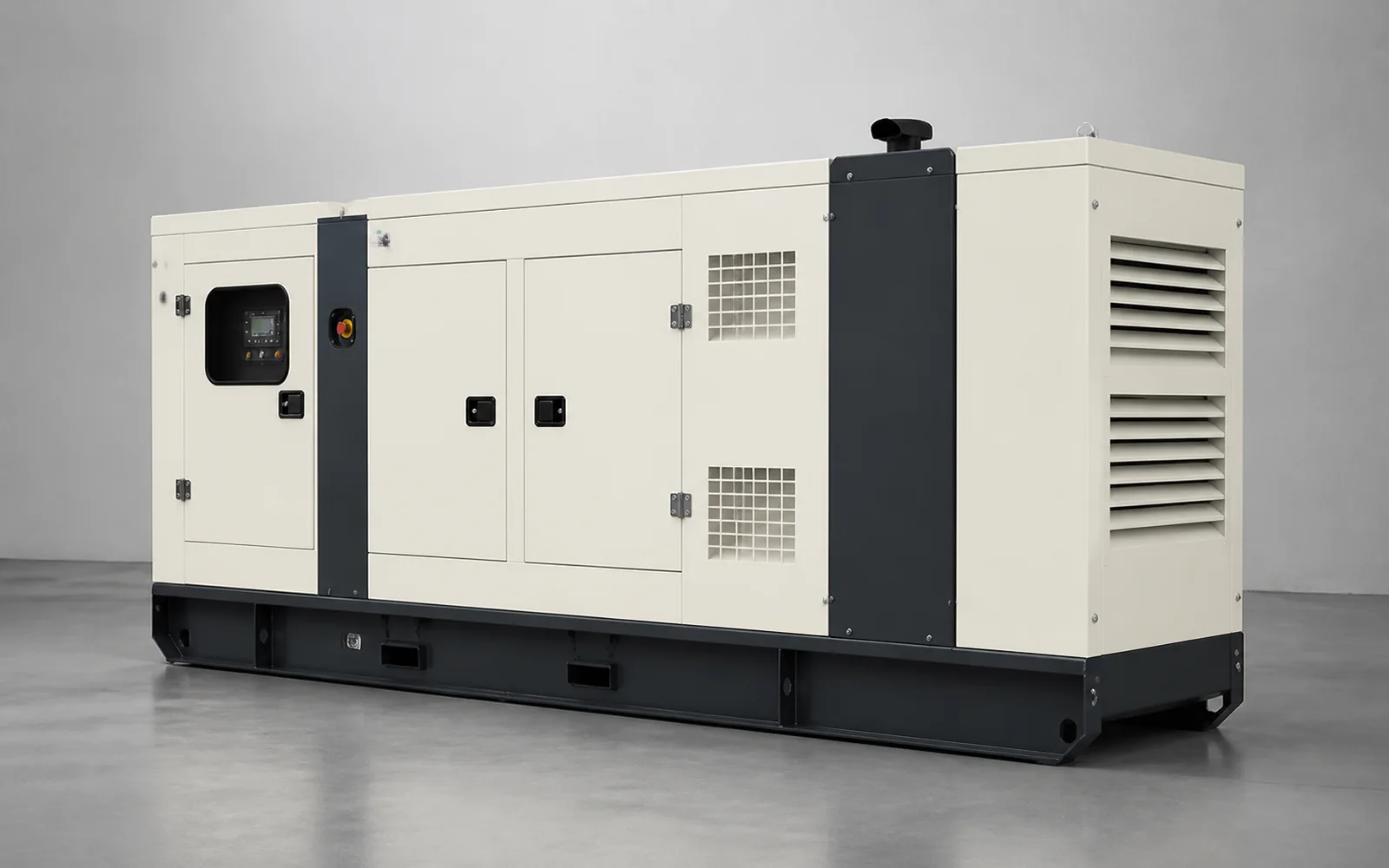
A hospital loses power and the ventilators, OR suites and vaccine refrigeration do not wait for the utility to fix the line. Emergency power is not a comfort option in healthcare - it is the difference between an inconvenience and a patient-safety event. This guide covers what 'hospital backup power' actually requires, how to verify a supplier's claims before you sign, and the red flags that mean you should walk away.
What does 'hospital-grade' backup power actually mean?
'Hospital-grade' is not a product rating you can look up in a catalogue. It is shorthand for a system that must start, pick up load and hold life-safety circuits within the time your code demands - every time, not only on a good day. In the US, emergency power for healthcare is typically governed by NFPA 110 (Standard for Emergency and Standby Power Systems); other markets use their own editions and equivalents, and the specific Class, Type and Level your facility needs depends on the building and its occupancy. The practical point: a set is only 'hospital-grade' if its starting time, transfer behaviour and supported loads match the standard your authority having jurisdiction enforces. Ask which one applies - do not assume the label covers you.
Does a standby generator mean my hospital is code-compliant?
Not by itself. A standby set is one component of an emergency power supply system (EPSS); compliance also depends on the automatic transfer switch, the distribution that separates life-safety from non-essential load, the on-site fuel, and the testing and record-keeping your code requires. A unit that starts reliably but feeds the wrong circuits, or runs out of fuel before the utility returns, is not compliant no matter what the nameplate says. Also confirm the duty: a set sized only for short emergency runs may be the wrong choice if your site must also survive extended outages or grid instability. Verify the whole chain, not just the engine.
How do I verify a hospital generator before buying?
Treat compliance as something you contract for, not something you hope for. A practical checklist: (1) Name the applicable standard and the required Class/Type/Level in the purchase order, and require the supplier to confirm the set meets it in writing. (2) Require a factory acceptance test that actually carries the load - stepped loading up to rated power, not a few seconds of no-load running - with a report tied to your serial number (our factory page explains what a real load-bank FAT looks like). (3) Ask for the acoustic test report and write your required noise limit into the contract; a silent enclosure helps but does not by itself prove a dB(A) target, so demand the measured figure. (4) Confirm the on-site fuel capacity and autonomy against the outage duration your risk assessment assumes, and put the number in the spec. (5) Request the emission stage and any conformity marks your market requires as supporting documents - ask, do not assume. (6) Keep every report; they are your commissioning baseline and your evidence if a performance claim ever arises.
When should I walk away from a hospital generator supplier?
Healthcare buyers should be the hardest to satisfy, because the stakes are patient safety. Walk away, or at least pause, if the supplier: cannot name the standard your facility must meet or will not put it in the contract; has no written factory test procedure and will not state the load steps actually performed; refuses to issue a report tied to your serial number; is vague about noise, emission or ingress-protection figures and offers only 'it's compliant' by word of mouth; or has no commissioning or service footprint near your site and will not state a response time. A supplier that builds for hospitals answers these in one email. One that cannot is showing you the risk before you pay for it.
How LINKPOWER handles healthcare power
LINKPOWER supplies open-type, silent, mobile-trailer and containerized diesel sets with Weichai, Yuchai and SDEC engines, configured to the project rather than pulled from a shelf - useful when a hospital needs a specific kVA band, a low-noise enclosure for a patient-adjacent location, or a containerized unit that ships as a complete package. Acceptance testing is run at the production base against the step load you specify, and the FAT record travels with the unit. For healthcare export projects, the documentation package - test reports, ratings data and the conformity documents your destination market expects - is built into the shipment, not added later. Before you commit, ask for the FAT template, the nearest service point and the spare-parts lead time; those three answers reveal more about post-sale reality than any brochure. See the healthcare application page, the silent set range and the factory capabilities: https://linkpowergenset.com/en/applications/hospital/ , https://linkpowergenset.com/en/products/silent-diesel-generator/ and https://linkpowergenset.com/en/factory/.
FAQ
Can a silent enclosure replace a separate acoustic report? No. An enclosure reduces noise, but your permitted level is set by your site's planning or health authority. Demand the measured dB(A) report at the operating load and write the limit into the contract - an enclosure is a means, not the proof.
How often must hospital emergency power be tested? That is set by your applicable code and your facility policy. Ask your authority having jurisdiction and your risk team, and require the testing and logging scope in the maintenance plan. We can supply the test procedure and the FAT record; the recurring on-site testing remains your operational duty.
What kVA do I need for a hospital? It depends entirely on the load schedule - which circuits are life-safety, which are critical, and which can shed. Build the load list first, then size the set to it; do not pick a number and back-fit the building. The 100-500 kVA and 500-1000 kVA product bands are a starting reference, but confirm against your own schedule: https://linkpowergenset.com/en/products/100-500-kva-diesel-generators/ and https://linkpowergenset.com/en/products/500-1000-kva-diesel-generators/.
What we need from you
Send the load schedule, the duty (standby, prime or extended backup), the applicable code and Class/Type/Level, the site noise and emission limits, and the outage duration you must survive. We will configure the package, run the factory acceptance test against your step load, and return the report with a project quotation - service footprint and spare-parts lead time stated up front. For a healthcare project, begin here: https://linkpowergenset.com/en/applications/hospital/.