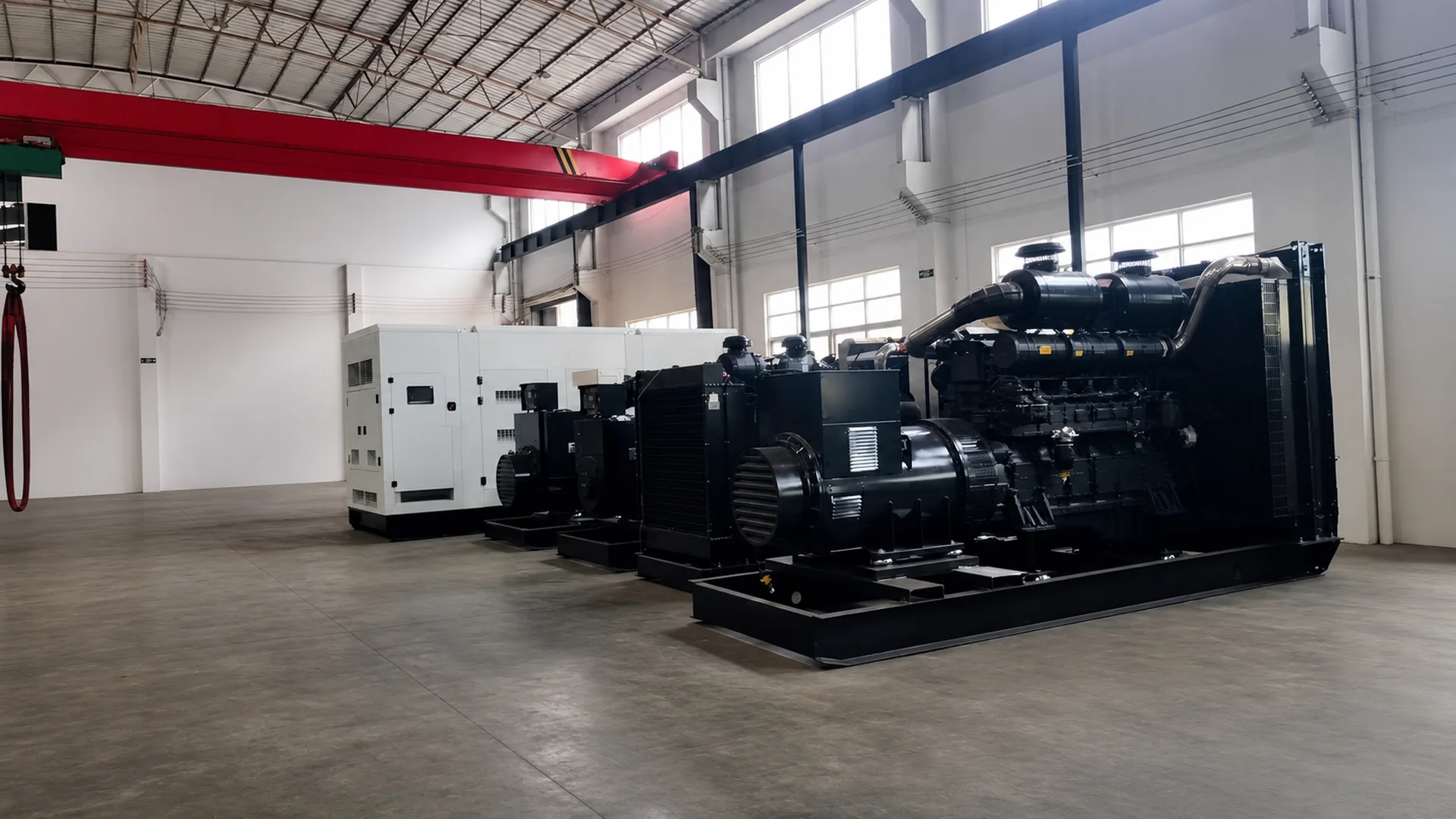
A warranty is the document buyers skip reading and regret not reading. Through late October 2026 the same pressure keeps showing up in trade coverage - grid constraints pushing data centers and industrial sites toward on-site generation (Power Engineering International's reporting on data-center delays from grid limits, and the Black Hills-Google 564 MW microgrid build for a Wyoming data center, both dated around 2026-10-26) - which means more buyers are purchasing standby and prime generator sets and trusting a warranty to stand behind the machine for years. This guide covers what a diesel generator warranty actually covers, where the gaps are, how to verify the terms before you pay, and the red flags that mean you should walk away.
What does a diesel generator warranty actually cover?
The short answer: a generator warranty covers defects in materials and workmanship from the manufacturer, for a defined period, under defined conditions. Everything else is a negotiation. The hard fact buyers miss is that a 'generator warranty' is rarely one document. The engine is frequently covered under the engine maker's own terms (Weichai, Yuchai and SDEC issue engine warranties through their service network), while the genset assembler warranties the alternator, control system, enclosure, fuel system and the assembly work. So a single set can carry two or three separate warranty scopes with different lengths, different claim routes and different exclusions. Before you compare offers, ask each supplier to list every warranty that applies, who issues it, the exact period, and what each one specifically covers and excludes - in writing.
Does a longer warranty mean I'm fully protected?
Not by itself. A long period on paper does nothing if the exclusions swallow the coverage or if no one can honour the claim where your site is. Common gaps: wear items and consumables (filters, belts, batteries, coolant, injector tips) are almost always excluded; damage from wrong fuel, poor installation, overload, or neglected maintenance is excluded; and 'worldwide' wording often collapses to 'where an authorised partner exists,' which may not be your country. A warranty is also not the same as a compliance guarantee - it does not certify emissions stage, CE, ISO or noise level; those are separate documents you must verify on their own. The protection you actually get is the intersection of three things: what the paper says, who can service it locally, and whether your operating conditions fall inside the stated limits. Read the exclusions before the headline number.
How do I verify the warranty before buying?
Verify from the contract and the issuing parties, not the sales slide. A practical checklist: (1) Get the exact warranty period for the genset assembly and, separately, for the engine, alternator and controller, stated in months or running hours - whichever comes first - and written into the contract. (2) Get the exclusions in writing: wear parts, consumables, installation, fuel and maintenance conditions. (3) Confirm who honours the claim - the factory, a local distributor, or the engine OEM's network - and get the contact and territory in writing. (4) Confirm spare-parts availability and the response window for a warranty fault; ask the supplier to state the lead time for common spares and the target response time, and put both in the contract rather than trusting a verbal promise. (5) Confirm what documentation proves a claim: commissioning report, run hours, maintenance log - and ask whether the warranty voids if a non-authorised technician services the set. (6) For the engine specifically, confirm the OEM warranty route through Weichai, Yuchai or SDEC and whether it is valid in your country without a separate local registration. (7) Keep the warranty, the commissioning record and the supplier's written response commitments in one file so a future claim is a phone call, not a debate. LINKPOWER is a factory-direct builder (https://linkpowergenset.com/en/factory/) supplying complete sets on Weichai, Yuchai and SDEC engines (https://linkpowergenset.com/en/products/weichai-diesel-generator/, https://linkpowergenset.com/en/products/yuchai-diesel-generator/, https://linkpowergenset.com/en/products/sdec-diesel-generator/), so the assembly warranty and the engine warranty route are stated together in the quotation, not discovered later.
When should I walk away from a warranty offer?
Walk away, or pause hard, if the supplier: refuses to put the warranty period and exclusions in writing; gives one number for 'the generator' but cannot separate engine from assembly coverage; names no local service party and no claim contact; excludes so much (wear, installation, fuel, maintenance, 'acts of God') that almost any real failure is 'your fault'; offers a period that sounds generous but voids on any service by a non-approved technician with no approved technician in your region; or cannot show a commissioning and test record that the set ran before shipping. A supplier that builds and exports complete packages gives you the assembly warranty, the engine warranty route and the after-sales contact in the same document. One that cannot is asking you to self-fund the first major failure - often just outside the verbal 'cover' they described.
How LINKPOWER handles warranty and after-sales
LINKPOWER builds diesel generator sets as complete packages - engine, alternator, controls, enclosure and test - so the warranty scope is defined against one responsible party rather than a chain of vendors pointing at each other (https://linkpowergenset.com/en/products/). Sets are produced in open, silent, mobile-trailer and containerized formats across Weichai, Yuchai and SDEC engines, and each is run and inspected in the factory before crating (https://linkpowergenset.com/en/factory/). The quotation states the assembly warranty and the engine warranty route, the exclusions, the spare-parts scope and the after-sales contact together, so a buyer knows exactly who to call and what proof a claim needs. For project work, the same package can be configured to your application - commercial building, hospital, factory, mining, telecom or infrastructure (https://linkpowergenset.com/en/applications/) - with the warranty terms written to match the duty and destination.
FAQ
Is the engine warranty the same as the generator warranty? Usually not. The engine is often covered by the engine maker (Weichai, Yuchai, SDEC) under its own terms, while the assembler covers the rest of the set. Always ask for both, separately, in writing.
Does warranty cover installation or commissioning problems? Generally no - installation and commissioning are typically the installer's responsibility, and a faulty install can void the equipment warranty. Confirm who is responsible for commissioning and get it in the contract.
What voids a generator warranty? Common voids are wrong or contaminated fuel, overload beyond rating, neglected maintenance, unauthorised servicing, and damage from poor installation or environment. Ask the supplier for the exact list before you sign.
What we need from you
Send the duty (standby or prime), the engine preference if any, the destination and the operating environment, and tell us whether you need a local service arrangement. We return a quotation that states the assembly warranty, the engine warranty route, the exclusions, the spare-parts scope and the after-sales contact together - so the cover you rely on is on paper before you pay, not a surprise after a failure. Start from the full product range (https://linkpowergenset.com/en/products/) and the factory build process (https://linkpowergenset.com/en/factory/).