On 2026-10-30 Power Technology reported Infinity Power and Hassan Allam Utilities began construction of the Nefer Minya project in Egypt, the kind of ground-breaking that, downstream, means a standby or prime diesel generator has to be sited, mounted and wired before the site is live (https://linkpowergenset.com/en/applications/construction/). For buyers, the generator is only half the job - the other half is the concrete, the clearances, the exhaust and the cable route that the supplier's drawing must specify before you break ground. This guide explains what site preparation actually involves, which numbers from the supplier you can trust, and how to verify them in writing before you pour - so the pad you build is the pad the set actually needs.
What does site preparation for a diesel generator actually involve?
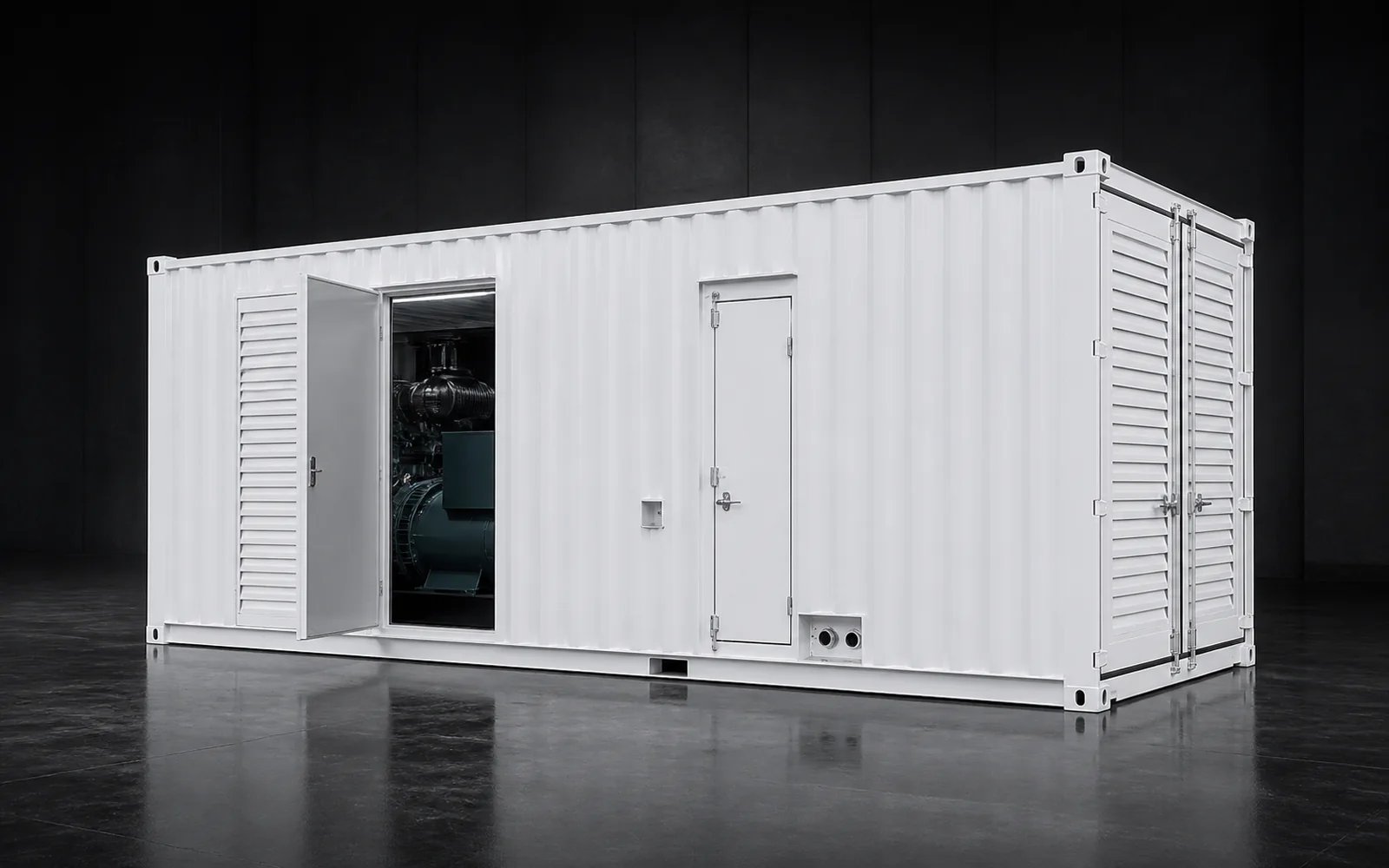
Site prep is four trades, not one: civil (the foundation and any bund), mechanical (vibration isolation, exhaust and fuel connections), electrical (cable route, gland plate, earthing) and ventilation (combustion air in, heat out). The hard fact is that the set's own footprint is the smallest number on the plan - you also need service clearances to open the enclosure, radiator or heat-exchanger access, exhaust run length, and a cable trench sized to the set's output. A containerized package arrives as a near-complete unit and needs the least on-site build (https://linkpowergenset.com/en/products/containerized-power-system/); an open or silent set on a base tank needs the same civil and electrical work but less factory integration; a mobile-trailer set may need almost no foundation at all (https://linkpowergenset.com/en/products/mobile-trailer-generator/). Match the package format to how much site work you can do, not just to the price on the quote.
Does the supplier's footprint and weight tell me what to build?
It tells you the start, not the finish, and this is where pads get built wrong. The drawing dimension is the skid or enclosure outer size; what your contractor needs is the installed footprint including service clearances - the space to swing the enclosure door, pull the radiator, and reach the control panel (https://linkpowergenset.com/en/products/silent-diesel-generator/). The weight matters more: a base or sub-base tank full of diesel adds substantial mass, and the foundation must be sized to the wet (fueled) weight, not the dry skid weight. Ask the supplier for both dry and wet weights and for the installed clearance envelope in one document; a number without the clearance is a number that will not pass your building inspector. Get the foundation load in kilograms per square metre so civil works are calculated, not guessed.
What clearances and ventilation does the enclosure actually need?
It depends on the format, and assuming one rule fits all is how sets overheat. An open-type set needs unobstructed air intake and a clear exhaust run; a silent enclosure relies on its own acoustic casing but still needs combustion-air openings and radiator discharge space kept clear (https://linkpowergenset.com/en/products/open-type-generator/). A containerized unit breathes through louvres and needs the intake and discharge faces left unblocked by walls or stored material. The boundary is simple: ventilation that looks adequate on paper fails when the set runs at full load on a hot day, so ask the supplier for the minimum intake and discharge clearances and the airflow in cubic metres per hour, stated for your ambient temperature - not a generic figure. Where local noise rules apply, treat the enclosure as one input to compliance, not the whole answer; the sound level and any applicable marking still have to be documented separately and written into the contract.
How do I verify the site numbers before I pour concrete?
Make the supplier answer six items, and refuse a vague 'standard footprint' as an answer to any of them: (1) A certified general-arrangement (GA) drawing showing the installed envelope with service clearances, not just the skid. (2) Dry and wet weights, and the foundation load they imply. (3) Exhaust routing and the emission-stage documents your local authority requires - request those certificates and confirm applicability; the set's emissions are verified by paperwork, not by the pad. (4) Vibration-isolation method (spring or rubber mounts) and whether the set is balanced to run on a floating base. (5) Cable entry: gland-plate position, cable size and the earthing point, so the electrician routes before the slab sets. (6) Fuel connection point and any bund or containment your authority mandates. A supplier who builds complete packages states these on a single drawing (https://linkpowergenset.com/en/factory/); one who cannot is asking your contractor to guess, and concrete does not forgive guesses.
When should I walk away from a site-prep offer?
Walk away, or pause hard, if the supplier gives you a footprint with no service clearances, a weight with no wet figure, ventilation numbers with no ambient-temperature basis, an exhaust route with no emission documents for your jurisdiction, vibration isolation described as 'standard' with no method named, or a foundation load you are expected to derive yourself. Also walk if the set is quoted as if it certifies emission stage, CE marking or sound level by virtue of being installed - it does not; those are separate documents you must hold. Any one of these missing in writing is enough to stop the pour. A foundation poured to the wrong number is the most expensive rework on a generator project, and the supplier who blurred the lines is the one least likely to pay for it.
The practical takeaway
Get the installed envelope and wet weight before concrete, not after; size ventilation to your real ambient, not a generic figure; and require emission, noise and marking documents as separate contract items, because site prep certifies nothing. Read the single GA drawing that names clearances, weights and connection points, and build to that (https://linkpowergenset.com/en/news/). LINKPOWER builds diesel generator sets as complete packages - open, silent, mobile-trailer and containerized formats across Weichai, Yuchai and SDEC engines (https://linkpowergenset.com/en/products/, https://linkpowergenset.com/en/products/open-type-generator/, https://linkpowergenset.com/en/products/silent-diesel-generator/) - with GA drawings, weights and connection points issued from the factory (https://linkpowergenset.com/en/factory/) so your civil and electrical teams work from the same numbers we build to. The pad you can verify on paper is the pad the set will actually sit on.
FAQ
Do I need a foundation for a mobile-trailer generator? Usually not a permanent one - a trailer set is built to run on a levelled, compacted pad or load-distribution plates, and the point of the format is to avoid civil works. Confirm the ground-bearing requirement with the supplier; if you plan to run it hard for long periods, ask whether tie-downs or chocks are needed for your site.
Can the supplier's GA drawing replace my structural engineer's calculation? No. The drawing gives you the loads and envelope; your engineer sizes the slab, reinforcement and bund to your soil and code. Use the supplier's wet weight and foundation load as the inputs - do not let the contractor estimate them.
Does site preparation affect emission or noise compliance? No. Civil works, ventilation and clearances are about safe, reliable operation; emission stage and sound level are separate specs verified with the supplier's documents and written into the contract. Good ventilation helps the set run cool, but it does not change its certified sound level.
What we need from you
Send your package format if chosen, the load and duty (standby or prime), your site's ambient temperature range, soil or slab constraints if known, and your local requirements for bunding, emissions and noise. We return a GA drawing that states the installed envelope, dry and wet weights, foundation load, clearance and ventilation figures, exhaust and cable points, and the separate compliance documents you must hold - so you can verify the site numbers line by line before the concrete truck arrives. Start from the full product range (https://linkpowergenset.com/en/products/) and the factory build and test process (https://linkpowergenset.com/en/factory/).