Most buyers start with one generator and one load. Then the site grows, the load list gets a second shift, or someone points out that a single set means a single point of failure - and the conversation turns to running two or more diesel generators in parallel. Done right, paralleling gives you redundancy, stepwise capacity and maintenance flexibility that no single oversized unit can match. Done carelessly, it gives you tripped breakers, circulating currents and a commissioning week you would rather forget. This guide walks through what parallel operation actually involves, so you can decide whether your project needs it and what to demand from a supplier before you sign.
When several sets beat one big unit
Paralleling makes sense in three common situations. First, load growth: if your facility draws 600 kW today and will draw 1,100 kW in two years, two sets sized in steps let you add capacity without scrapping the first machine. Second, reliability: with N+1 configuration, one set can fail or go into service while the others carry the load, which matters enormously for hospitals, data rooms and process plants. Third, fuel economy at part load: a big diesel running at 30 percent load burns fuel inefficiently and risks wet stacking, while a control system that switches sets in and out keeps each running engine near its sweet spot. If none of these apply - if your load is stable, modest and tolerant of a short outage - a single set is usually the cheaper and simpler answer. Match the configuration to the load profile before you match anything else: https://linkpowergenset.com/en/products/.
What synchronization actually requires
Two generators can only be connected together when their output waves match. The control system has to bring the incoming set to the same voltage, the same frequency, and the same phase angle as the bus, then close the breaker within a narrow window - typically in fractions of a second. Older installations did this with an operator watching a synchroscope; modern sets do it automatically through dedicated controllers. For the buyer, the practical point is this: synchronization is not a feature you can add later with a firmware update. The alternators, governors, voltage regulators and breakers have to be specified for parallel duty from day one, and mixing sets from different suppliers or different vintages is where most synchronization problems start. If you plan to parallel sets, say so in the RFQ and require that all units be configured, tested and proven for parallel operation as one system.
Load sharing: the part buyers underestimate
Closing two breakers is the easy half. The harder half is keeping the sets sharing load proportionally and stably as the demand moves around. Active load-sharing control balances real power (kW) between sets, while voltage regulation and reactive power control handle the kVAR side - and problems on either side show up as one engine working hard while another idles, or as nuisance trips when a large motor starts. A serious proposal for a paralleling project spells out the load-sharing method, the protection settings and the load management strategy: which loads get shed first when a set drops out, how many sets start automatically, and in what sequence. Ask the supplier to put those settings in writing, and ask how they were verified - a desk study is not a test.
Switchgear, controls and the configuration question
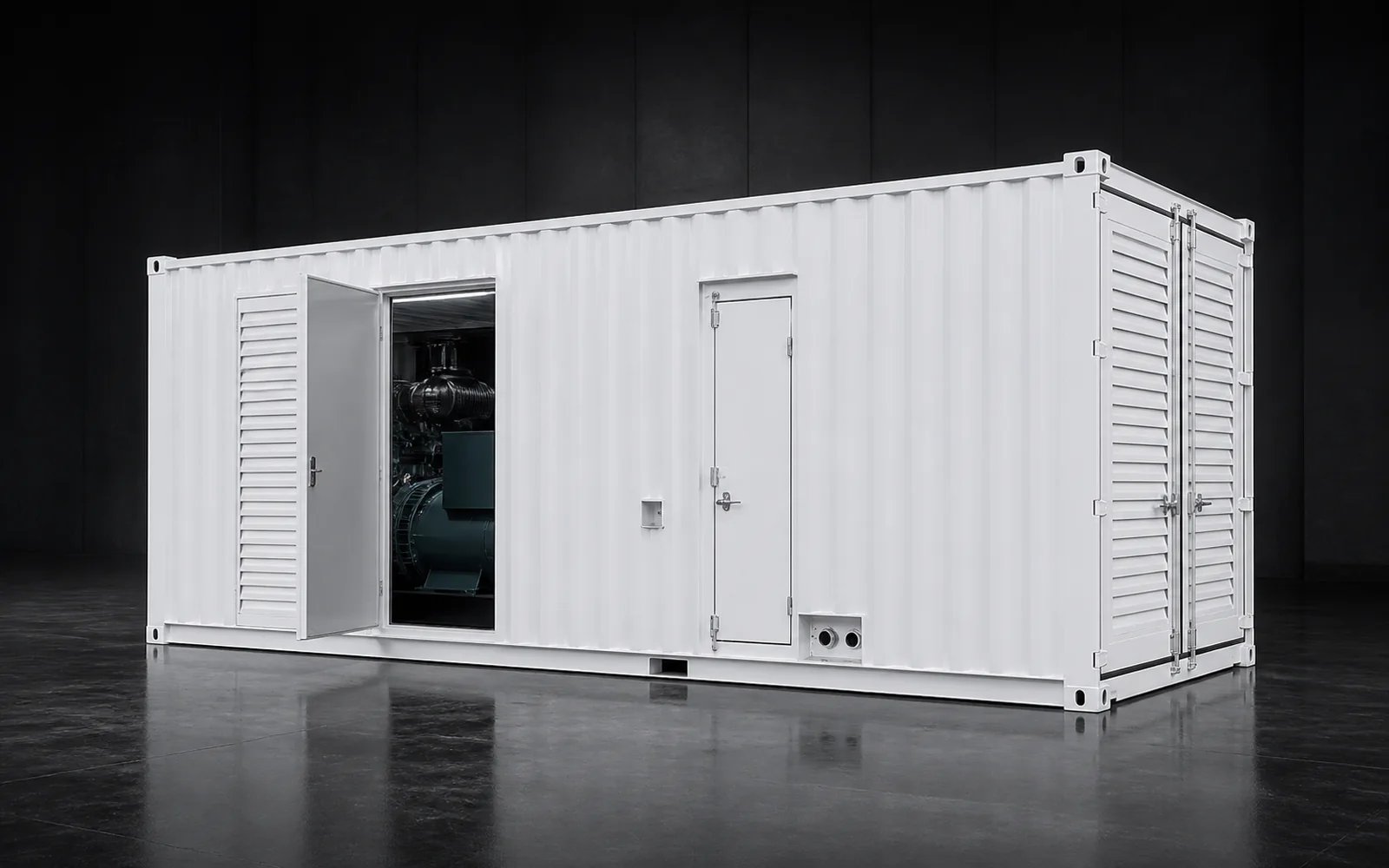
A paralleling system is as much electrical infrastructure as it is generating equipment: bus, breakers, protection relays, synchronizing controllers, and often a PLC-based load management layer on top. The layout varies with the project - a containerized plant with two or three identical sets uses a different arrangement from a facility that parallels one standby set with another across the building. This is where factory configuration matters more than catalogue pages. Because the sets, controls and switchgear are matched and wired at the factory, the whole system can be run under load before it ships, which is the only moment problems are cheap to fix. For projects in the larger frame sizes, where paralleling is most common, review how the sets are packaged and tested before delivery: https://linkpowergenset.com/en/products/500-1000-kva-diesel-generators/ and https://linkpowergenset.com/en/products/1000-3750-kva-diesel-generators/. Containerized plants, where several standardized sets feed one bus, are a frequent fit for this approach: https://linkpowergenset.com/en/products/containerized-power-system/.
Compliance and documentation: verify, don't assume
Paralleling adds paperwork on top of the usual generator documentation. Protection coordination with the site's existing installation, and - if any scenario connects the generation to the utility grid - the local utility's interconnection requirements, need to be confirmed with the authorities and the network operator in your market before the design is frozen. Requirements differ by country and even by utility, so treat any general statement about grid codes as a starting point, not an answer. The same buyer-verification discipline applies as with any set: ask for the applicable compliance documents for your destination market, the as-measured noise figure for your enclosure, and the emission-stage certificate your installation site requires, and write those requirements into the contract. For grid-parallel projects specifically, ask the supplier to state clearly whether the proposed system is designed for island operation only or for utility paralleling, because the two are different systems with different approval paths.
What a factory witness test should cover
For a single set, a load test proves the machine. For a paralleling system, the test has to prove the system: two or more sets synchronized, sharing load across the range, responding to a simulated set failure, and exercising the load-shedding sequence you agreed on. Insist on a witness test at the factory with your configuration - the same units, the same controllers, the same switchgear you will receive - and get the test records with the shipment. A supplier that builds and tests complete paralleling systems at its own factory can show you the whole system working before it goes into the container, and that is the single best predictor of an uneventful commissioning: https://linkpowergenset.com/en/factory/.
FAQ
Can I parallel generators from different manufacturers or of different sizes? Technically, mixed sets can be paralleled if their governors, voltage regulators and protection are properly matched, but every mixed system is a custom engineering exercise with more risk in commissioning and support. The safer route is identical or same-family sets specified for parallel duty from the start, so the load-sharing behaviour is uniform and spares are common.
Is parallel operation the same as running on grid (grid-tie)? No. Standby parallel systems run isolated from the utility: several sets share the site load on their own bus. Grid-parallel operation means the generation synchronizes with the utility network, which requires the utility's approval and equipment certified to that utility's interconnection requirements. Confirm with your network operator which regime applies before you buy, and have the supplier state the design basis in the contract.
How many generators can run in parallel? There is no fixed technical limit - installations with many sets sharing one bus are common - but each additional set adds controls, protection and commissioning effort. Most buyers size the plant in the smallest number of units that still gives the redundancy and stepwise capacity they need, and let the load management system handle the switching.
Planning a paralleling project? Send LINKPOWER your load list, the redundancy you need and the site's electrical single-line diagram, and you get a configuration - open, silent or containerized sets on Weichai, Yuchai or SDEC engines - specified for parallel duty, factory-matched with its controls, and load-tested as a system before shipment. Export documentation and commissioning support are quoted up front. Start from the applications overview to see how similar plants are configured: https://linkpowergenset.com/en/applications/ and https://linkpowergenset.com/en/applications/infrastructure/.