Every diesel generator set is really two products in one: the engine-alternator core, and the package wrapped around it. Open, silent, trailer and containerized are four ways of dressing that core for different sites. Pick wrong and you get noise complaints, weather damage, or a unit you cannot move when the job moves.
Start with the site, not the catalogue
Open sets belong indoors — a purpose-built generator room where ventilation, exhaust, attenuation and access are designed into the building. If you already have that room, an open set is the cheapest path to rated power. If you do not, you are buying a building problem, not saving money. See the open-type range: https://linkpowergenset.com/en/products/open-type-generator/
Silent when noise is the constraint
Silent (canopy) sets put the generator in a weather-resistant acoustic enclosure with integrated exhaust and intake silencing. For outdoor placement near offices, residences or hospitals, this is usually the default. A well-designed canopy can hold 75 dB(A) at 7 m; confirm the site limit before you specify, because once the enclosure is built too thin there is no cheap fix. See the silent diesel generator sets: https://linkpowergenset.com/en/products/silent-diesel-generator/
Trailer when the load moves
Construction, events and rental fleets need power that drives to the site. Mobile trailer sets mount the generator, fuel tank and sometimes a mast on a road-legal chassis. They trade some weather protection for mobility. For temporary power that relocates weekly, a trailer beats a crane-lifted set every time. See mobile and trailer sets: https://linkpowergenset.com/en/products/mobile-trailer-generator/
Container for high power and harsh duty
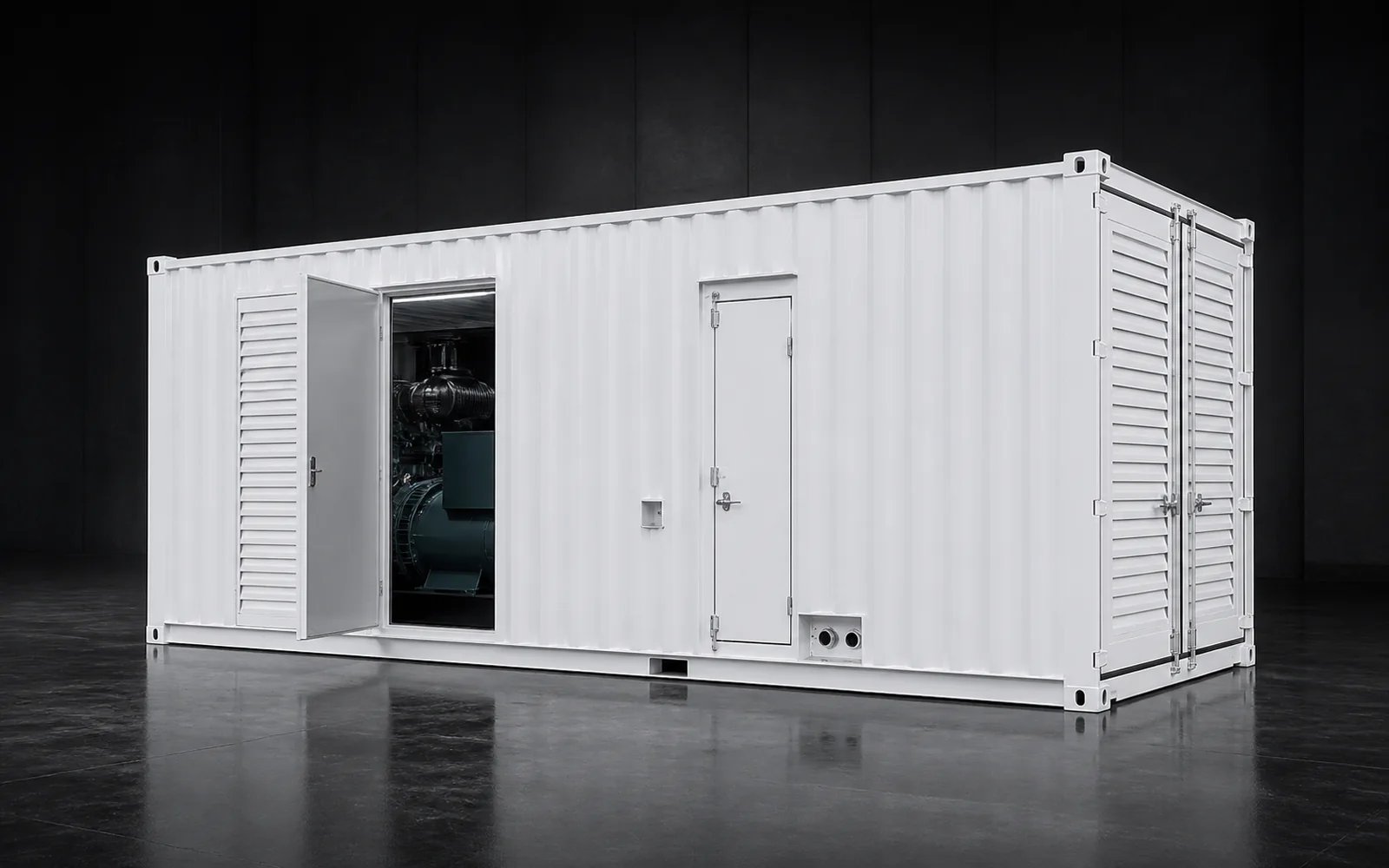
Above roughly 900 kVA, or anywhere dust, heat and long runtime dominate — mines, infrastructure, remote industry — the containerized system wins. It wraps the engine, radiator, tank, switchgear and controls into one ISO-style box with its own ventilation and weatherproofing. See containerized power systems: https://linkpowergenset.com/en/products/containerized-power-system/
How the four map to applications
Construction with frequent relocation: trailer ( https://linkpowergenset.com/en/applications/construction/ ). Factories with a fixed install and an existing plant room: open ( https://linkpowergenset.com/en/applications/factory/ ). Mining with dust, heat and altitude: containerized ( https://linkpowergenset.com/en/applications/mining/ ). Hospitals and commercial buildings with noise limits: silent ( https://linkpowergenset.com/en/applications/hospital/ ).
Do not forget the supporting kit
The package is only half the job. You also need the automatic transfer switch for standby duty, the right fuel-tank autonomy, and a clean path for exhaust and cable. Specifying the enclosure without the ATS and cabling is how projects miss their commissioning date.
FAQ
Can I put an open set outside? Not safely. Open sets need a ventilated, weather-protected room. Outdoors, use a silent or containerized package.
Which is cheapest? Open, if you already have the room. If you must build that room anyway, a silent set often costs less overall.
Can a trailer set run as prime power? Yes for temporary and rental duty. For permanent yearly run hours, a fixed silent or containerized set is the better life-cycle choice.
What we need from you
Send the site photo or layout, the noise limit, how often the load moves, and the duty hours. We will match the package, size the tank and transfer switch, and prepare a project quotation — including the nearest service point and spare-parts lead time before you commit.