On 2026-10-29 Power Technology reported the US DOE approved a $5.1bn loan to Alliant Energy for power projects, the latest sign that grid reliability and local generation are back at the top of the spending list. For buyers specifying a diesel generator, one line item in that spec gets overlooked until commissioning day: the fuel tank. Too small and the set stops before utility power returns; too large and you pay for steel, space and fuel you will not burn. This guide explains what tank size actually controls, how much autonomy your site really needs, and how to verify the tank and fuel are compliant and clean before you pay - so the number on the quote means what you think it means.
What does generator fuel tank size actually determine?
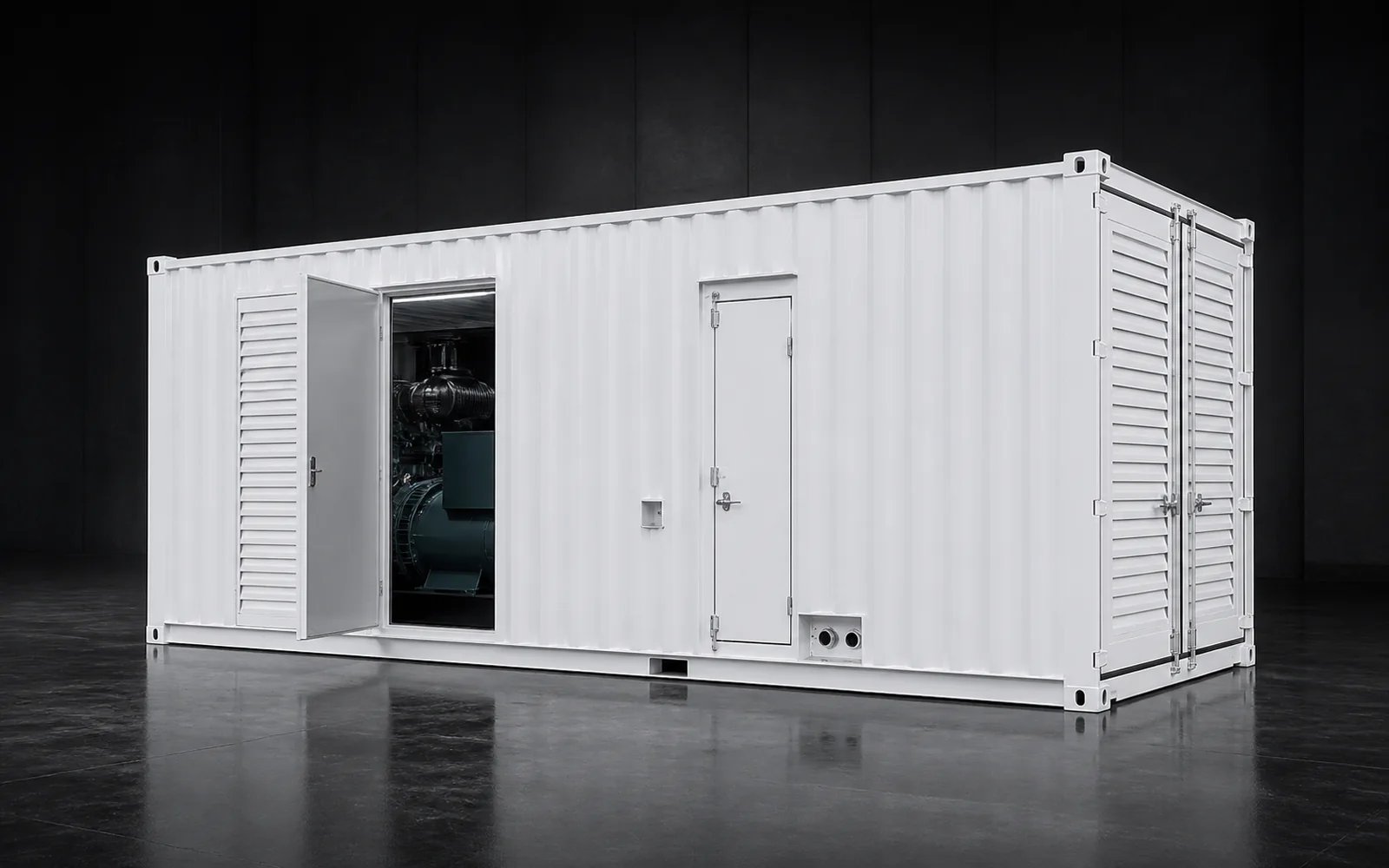
The tank sets how many hours the set runs without refueling - nothing more, and nothing less. The hard fact buyers miss is that autonomy in hours equals usable tank volume divided by the actual burn rate at your load, not the nameplate figure on a brochure. A silent or open set usually ships with an integrated base tank sized for a fixed band of standby hours; a mobile-trailer set carries its own onboard tank; a containerized package may integrate a larger base tank; and prime or continuous duty at a remote mine or camp needs a sub-base or external bulk tank sized to your refuel interval. The tank does not change the generator's power, its emission stage or its sound level - those are separate specs you must verify on their own (see our noise verification guide and our fuel-consumption guide). Treat tank size as a runtime question, answered by your load and your refuel plan, not by a model number.
Does an integrated base tank mean I have enough autonomy?
Not necessarily, and this is where projects get caught. An integrated base tank is the steel tank built into the set's skid or enclosure, sized by the manufacturer for a standard standby autonomy band. It is convenient because it arrives with the set and needs no civil works, but it may fall short for two common cases: a long utility outage beyond the band, or prime and continuous duty where you burn fuel every hour the site runs. The boundary is simple - a base tank suits intermittent standby with a known, short outage; anything that must run for days needs a sub-base tank (a larger rectangular tank beneath the skid), a day tank that gravity-feeds the engine for continuous duty, or an external bulk tank filled on a schedule. Before you accept 'it comes with a tank,' ask for the usable litres and the load at which that figure was measured - a tank quoted at 100% load looks much smaller at your real 60% load.
How much fuel autonomy do I actually need for my site?
Start from the outage or duty you are protecting against, then work back to litres. For standby at a commercial building or hospital, the question is how long the longest realistic utility interruption runs here - often a shift or a day, sometimes more during storms. For construction temporary power, it is how far the nearest fuel delivery is and how reliable that delivery is (https://linkpowergenset.com/en/applications/construction/). For mining or off-grid prime power, autonomy is set by your refuel logistics, not by comfort - a remote site may need days of fuel because the truck only comes weekly (https://linkpowergenset.com/en/applications/mining/). The method is the same every time: take your expected load, get the set's fuel burn at that load from the supplier's consumption curve (our fuel-consumption guide shows what that curve should contain), multiply by the hours you must cover, and add a margin for the load you forgot. Ask the supplier to state autonomy in hours at a named load - a number without the load is not a number you can use.
How do I verify the tank and fuel are compliant and clean before buying?
Make the offer answer six checks, and refuse a vague 'standard tank' as an answer to any of them: (1) Capacity and usable volume - the litres you can actually draw, not gross, at a stated load, in writing. (2) Bunding and containment - ask for the secondary-containment requirement from your local environmental or fire authority and confirm the tank meets it; do not assume a single-skin tank is legal where you are. (3) Material and welds - for sets built and tested at the factory, ask what the tank is made of and how it was pressure-tested (https://linkpowergenset.com/en/factory/). (4) Fuel specification - the diesel should meet the market fuel standard (ASTM D975 in the US, or the local equivalent); request a fuel quality certificate and a water-and-particulate check on delivery. (5) Filtration and polishing - ask whether the tank has a water separator and whether fuel polishing is available if the set sits for months between runs. (6) Connections - confirm fill, vent, drain and gauge locations match your site so the tank is installable, not just shippable. A supplier who builds complete packages states these in one document (https://linkpowergenset.com/en/products/); one who cannot is asking you to discover the gaps with a half-empty tank during an outage.
When should I walk away from a fuel tank or storage offer?
Walk away, or pause hard, if the supplier: quotes a tank with no usable volume or no load stated; offers a single-skin tank where your authority requires bunding; cannot tell you the material or test method; ships fuel with no quality certificate or no water separator; sizes the tank from nameplate kVA instead of your load; or sells the tank as if it certifies emission stage, CE marking or sound level - it does not. Any one of these missing in writing is enough to walk. A fuel tank is a safety and compliance item, not a free accessory, and a supplier who blurs those lines is the one most likely to leave you non-compliant, or dry, at the worst moment.
The practical takeaway
Size the tank from your load and your refuel plan, stated in hours at a named load - not from the model number. Confirm bunding with your local authority, get the tank's material and pressure-test in writing, and require a fuel quality certificate on delivery. A tank does not certify emission stage or sound level; request those separately and put them in the contract (https://linkpowergenset.com/en/news/). LINKPOWER builds diesel generator sets as complete packages - open, silent, mobile-trailer and containerized formats across Weichai, Yuchai and SDEC engines (https://linkpowergenset.com/en/products/, https://linkpowergenset.com/en/products/containerized-power-system/, https://linkpowergenset.com/en/products/mobile-trailer-generator/) - with integrated or sub-base tanks matched to your autonomy, built and pressure-tested at the factory (https://linkpowergenset.com/en/factory/). The tank you can verify on paper is the tank that will still have fuel in it when the outage runs long.
FAQ
Can one base tank cover both standby and prime duty? Rarely. Standby base tanks are sized for short, infrequent runs; prime or continuous duty burns fuel every operating hour and normally needs a sub-base or external bulk tank sized to your refuel interval. State your duty before you accept the standard tank.
Does a bigger tank mean I need a stronger foundation? Often yes for sub-base and external bulk tanks, because filled diesel is heavy - roughly 0.83 kg per litre. Confirm the pad or bund footprint and load with your installer; the tank supplier should give you the filled weight so civil works are not guessed.
How do I keep fuel good if the set runs only a few hours a year? Ask for a water separator on the tank and a fuel-polishing plan, and request a water-and-particulate test before a long standby stretch. Stale, wet fuel is the most common reason a 'ready' standby set fails to start.
Does tank size affect emission or noise compliance? No. Tank capacity is a runtime and storage item; emission stage and sound level are separate specs you must verify with the supplier's documents and write into the contract.
What we need from you
Send your duty (standby, prime or continuous), the load you expect, your longest realistic outage or refuel interval, and your local bunding requirement if you know it. We return a specification that states tank type, usable volume, autonomy in hours at your load, material and test method, and fuel specification together - so you can verify the tank line by line before you sign, not during the next blackout. Start from the full product range (https://linkpowergenset.com/en/products/) and the factory build and test process (https://linkpowergenset.com/en/factory/).