Fuel consumption and runtime decide whether a generator is a convenience or a liability on your site. On 2026-10-23, Power Engineering International reported that America's data-center construction is being delayed by grid constraints, and operators weighing on-site power - along with construction, mining and telecom buyers - keep asking the same concrete question: how long will this set actually run before I refill it, and can I trust the number on the quote? This guide explains what drives diesel generator fuel use, why brochure figures mislead, how to size a tank for the autonomy you need, and the verification checklist to use before you pay.
How much fuel does a diesel generator actually burn per hour?
A diesel set's fuel use is set by the load it carries, not by its nameplate kVA. As load rises from idle to full output, consumption rises with it - but not in a straight line, and a set loafing at very low load burns more fuel per kWh than one running near its design point. The honest number is specific fuel consumption (SFC), expressed in grams of fuel per kWh, and that figure is engine- and alternator-specific: the same kVA from two different engine families will not burn the same. Ask the supplier for fuel consumption at 25%, 50%, 75% and 100% of the rated load, measured to a stated standard (ISO 8528-1 for the rating basis, ISO 3046 for reference conditions), not just one headline figure at 100%. If a quotation gives a single L/h with no load point and no standard, you cannot plan refuelling or cost around it. As a sanity check you can estimate L/h from (output kW x load factor x SFC) divided by fuel density, but the SFC must come from the engine maker's confirmed data - you are checking their figure, not inventing your own.
Does the brochure fuel figure tell me my real runtime?
Almost never on its own. A brochure usually quotes consumption at a single load point - often 100% - while your real duty is a mix of partial loads, and partial load is where the gap opens up. Runtime is simply tank capacity divided by consumption at your actual load, so both halves have to be yours, not the catalogue's. A set sized for a 70% average load will outrun a brochure '8-hour' claim built on 100% burn, and a set left idling between outages will under-run it. Define the load profile you expect - standby occasional, prime variable, or base-load continuous - and ask the supplier for consumption across that profile, then divide your tank litres by the consumption at your typical load to get a runtime that means something on your site.
How do I size the fuel tank for the runtime I need?
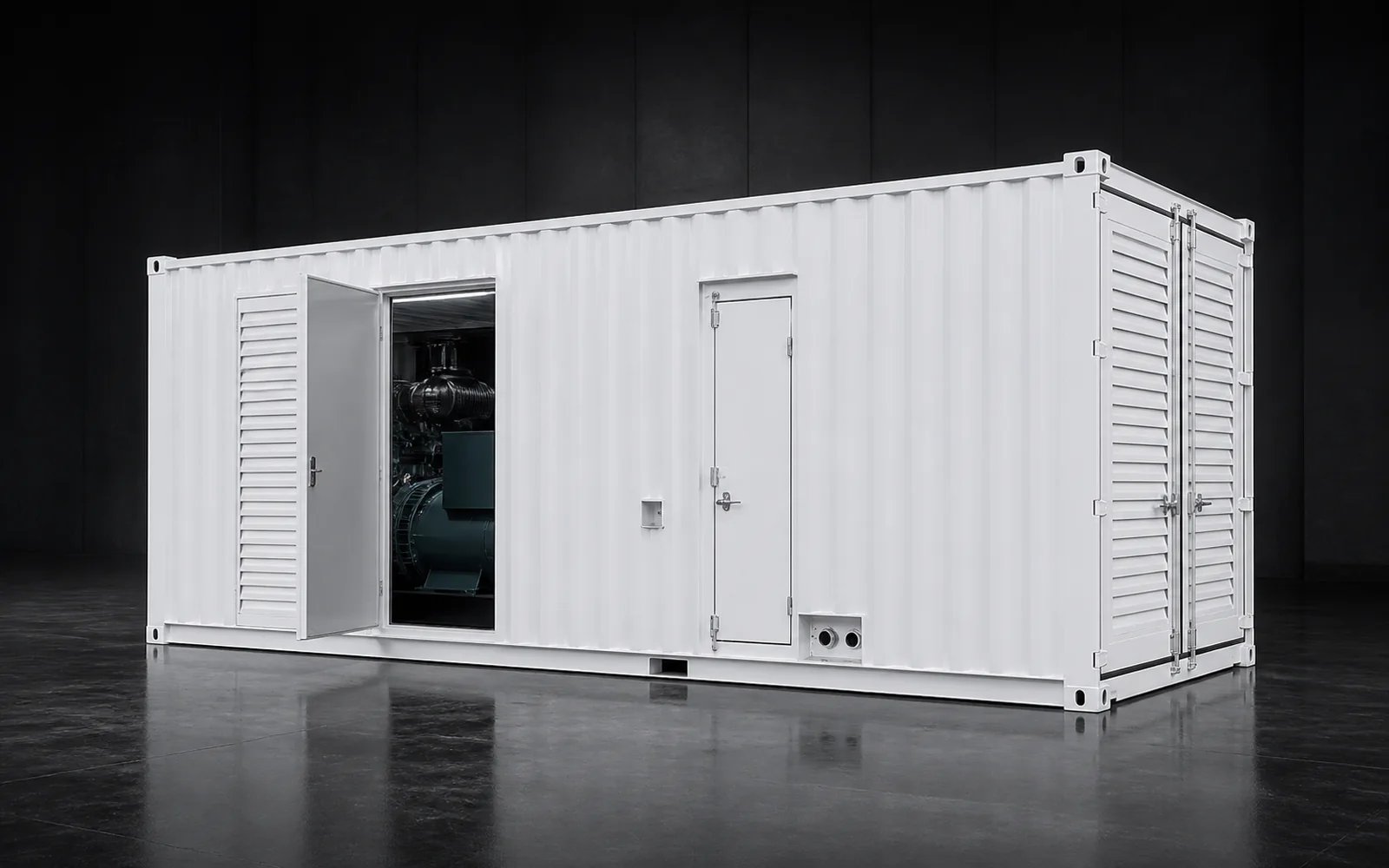
Start from the autonomy hours the site demands, not from whatever tank ships by default. A base-mounted tank gives you the standard few-hours-to-one-day buffer; a separate day tank or bulk storage extends it for sites where refuelling is slow or risky - remote mines, islanded microgrids, or any location where a missed delivery means a stopped process. The method: required autonomy hours x consumption at your typical load = minimum tank capacity, then add margin for cold starts and the load you forgot. Different packages carry different tank options - an open-type set often runs a base tank you can pair with bulk storage (https://linkpowergenset.com/en/products/open-type-generator/), a silent enclosure integrates the tank into the housing (https://linkpowergenset.com/en/products/silent-diesel-generator/), and a containerized system can be built with a base or day tank sized for long autonomy (https://linkpowergenset.com/en/products/containerized-power-system/). Confirm the actual litres in writing; 'large tank' is not a number you can refuel to.
How do I verify a supplier's fuel consumption and tank numbers before buying?
Verify from a factory test and the contract, not the PDF. A practical checklist: (1) Request the fuel consumption curve - L/h at 25/50/75/100% load - measured per ISO 8528-1 and ISO 3046, with reference ambient and altitude stated. (2) Require a factory acceptance test that runs the set at your specified step loads and records actual fuel use, so the brochure number meets your real load. (3) Confirm the base tank and any day tank capacity in litres, and whether the tank is integral or separate. (4) Ask how altitude and ambient temperature are corrected - a set rated at sea level burns differently at 2,000 m, and the supplier should state the correction basis. (5) Put every figure - consumption at each load, tank litres, autonomy hours - into the purchase contract so the quotation is checked against a measured result, not a hope. LINKPOWER runs the factory acceptance test against your specified step load and records consumption across the load range before crating (https://linkpowergenset.com/en/factory/), and the engine options span Weichai, Yuchai and SDEC across open, silent, mobile and containerized packages.
When should I walk away from a fuel-consumption claim?
Walk away, or pause hard, if the supplier: quotes a single L/h with no load point and no standard; refuses to provide a consumption curve or a factory test record; answers 'big tank' when you ask for litres; ignores altitude and temperature correction for a high or hot site; or will not write the consumption and tank figures into the contract. A supplier that builds and exports regularly hands you the curve, the test record and the tank drawing in one reply. One that cannot is asking you to find the shortfall during your first extended outage - when the fuel gauge reads empty and the delivery truck is a day out.
How LINKPOWER builds sets with the fuel autonomy you specified
LINKPOWER is a factory-direct builder of diesel generator sets with Weichai, Yuchai and SDEC engines, in open, silent, mobile-trailer and containerized formats so the tank and package fit the duty - a mobile trailer for a construction site that refuels from a bowser (https://linkpowergenset.com/en/products/mobile-trailer-generator/), a containerized unit with a day tank for a remote mine or microgrid (https://linkpowergenset.com/en/products/containerized-power-system/), a silent set with an integral tank for a noise-sensitive site (https://linkpowergenset.com/en/products/silent-diesel-generator/). The fuel consumption across your load profile is measured in the factory acceptance test before shipping, and the tank capacity is confirmed against the autonomy you specified rather than a default. See the full product range (https://linkpowergenset.com/en/products/) and the factory test process (https://linkpowergenset.com/en/factory/), or the application notes for construction (https://linkpowergenset.com/en/applications/construction/), mining (https://linkpowergenset.com/en/applications/mining/) and telecom (https://linkpowergenset.com/en/applications/telecom/).
FAQ
Do I need a day tank or is the base tank enough? The base tank covers standard standby and short prime runs. If your site cannot be refuelled within that window - remote, hazardous, or process-critical - specify a day tank or bulk storage sized to your autonomy hours and confirm the litres before ordering.
Does a bigger generator use more fuel? At the same load, a larger set often burns slightly more because it is running further below its efficient point; at full output it is the opposite. Size to your real load rather than buying headroom you idle through, and the consumption will fall where it matters.
How does altitude change fuel use? Thin air reduces engine power, so at high altitude a set may need derating and will show different consumption than its sea-level sheet - ask the supplier for the altitude correction basis and confirm it in writing.
Can I trust the supplier's fuel number for costing? Only the measured, contract-written figure. Use it for refuelling schedules and operating cost; treat any unverified brochure number as a planning upper bound, not a budget line.
What we need from you
Send the expected load profile and duty (standby, prime or continuous), the required autonomy hours, the site altitude and ambient temperature, and the tank arrangement you prefer. We confirm the engine-specific consumption across your load range, run the acceptance test recording actual fuel use, size the tank to your autonomy, and return a quotation built to your refuelling reality - not a catalogue default. Start the configuration from the full product range (https://linkpowergenset.com/en/products/) and the factory test process (https://linkpowergenset.com/en/factory/).