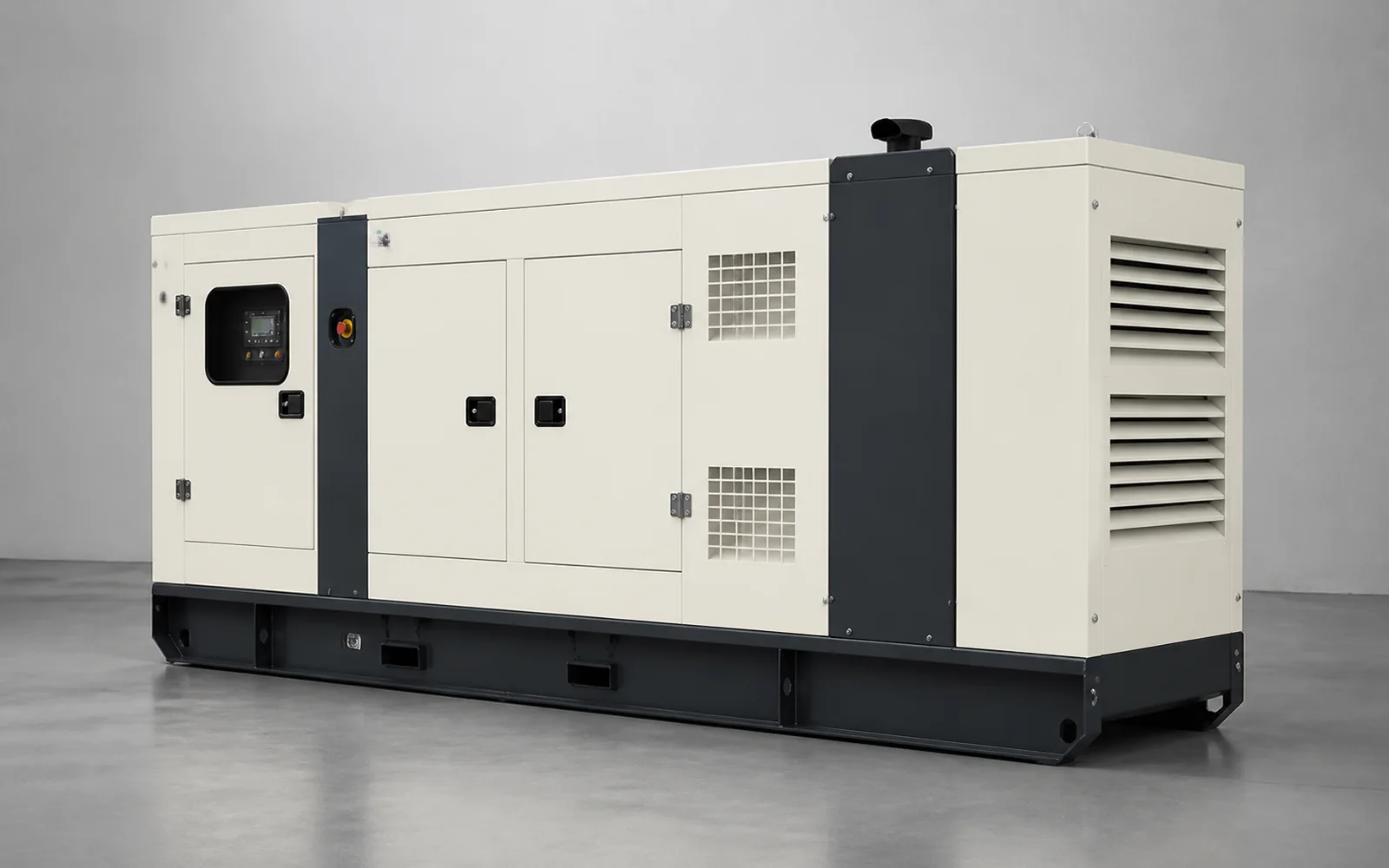
Late 2026 has been a busy season for grid-reliability policy. In November 2026, Power Engineering International covered PJM putting generator performance at the center of its cold-weather plans, and POWERGEN 2027 announced a keynote program built around grid reliability and the future of power generation. Behind every one of those discussions sits a practical buyer question that gets asked only after the engine is chosen: will this generator pass the fire marshal and the fuel-system code once it is installed in my building? This guide explains what 'fire-code compliant' actually covers on a generator set, how to verify it before you buy, and when to walk away from a claim you cannot prove.
What does 'fire-code compliant' actually cover on a generator?
Conclusion first: there is no single 'fire compliant' stamp on a generator. What inspectors check is a chain of separate requirements - the enclosure fire rating, the fuel storage and piping, the automatic fuel shutoff, ventilation, and the separation distances to occupied spaces - each governed by a different document and enforced by your local authority having jurisdiction (AHJ). A set can have a perfect fire-rated enclosure and still fail because the day tank is the wrong type, the vent terminates in the wrong place, or the fuel line passes through a fire-rated wall without the right penetration. Treat 'code compliant' as a list of items to verify, not a single checkbox.
Does a fire-rated enclosure mean my fuel system is compliant?
No, and this is the gap that fails inspections. A fire-rated enclosure or a containerized package protects the generator from a fire outside and limits fire spreading from inside, but it says nothing about whether your fuel tank, piping and shutoff meet the fuel-code requirements. In many jurisdictions the fuel system is governed by a different set of rules - tank construction, secondary containment, venting and emergency shutoff - than the enclosure fire rating. Ask the supplier for both, separately: the enclosure fire-rating classification and the test standard it was verified against, and the fuel-system compliance path for your location. Verify them as two distinct items, because the inspector will.
How do I verify fire and fuel-system code before I buy?
(1) Name the governing documents for your site. In the US this commonly includes NFPA 110 (emergency power supply systems), NFPA 30 and NFPA 37 (fuel and stationary combustion-engine installations), and the local building code; in the EU the enclosure fire rating is commonly referenced to a classification such as EN 13501 and the fuel tank to standards such as EN 12285, while other regions use their own adopted editions. Require the supplier to state which edition applies to your project and confirm it with your AHJ before you order. (2) Get the enclosure fire-rating in writing: the classification, the test standard, the certifying body and the certificate number, and confirm it matches the rating your local code requires. (3) Verify the fuel system - tank type and construction (for example UL 142 or UL 2085-type protected tanks in the US, or the local equivalent), secondary containment, venting and the automatic fuel shutoff - request the drawings and the compliance statement, and have them reviewed by your engineer or AHJ. (4) Check separation and penetration details: required distances to occupied spaces, and how fuel and electrical lines pass through fire-rated walls or floors. (5) Confirm ventilation and exhaust routing meet the applicable code, including clearances that keep heat or fumes away from intakes or occupied areas. (6) Put every one of these - the specific editions, the ratings, the certificate numbers and the rejection responsibility - into the purchase contract before you pay, not after.
When should I walk away from a 'code-ready' generator claim?
Walk away if any of these show up. Walk if a supplier answers 'it is code compliant' but cannot name the specific code edition or produce a certificate number - compliance is location-specific, and a vague claim is a red flag. Walk if the enclosure fire rating and the fuel-system compliance are bundled into one unspecified statement with no separate documents. Walk if the quote omits the fuel tank type, containment or shutoff entirely, or treats them as 'standard' without stating which standard. Walk if the supplier refuses to put the applicable code edition and the rejection responsibility in the contract. And walk if you are told a generic international certificate covers your local fire marshal - local adoption and amendments decide what passes, not the certificate alone.
Where does LINKPOWER fit, and what can you ask for?
LINKPOWER builds diesel generator sets in open, silent, mobile-trailer and containerized packages, powered by Weichai, Yuchai and SDEC engines - see the range at https://linkpowergenset.com/en/products/ and the engine builds at https://linkpowergenset.com/en/products/weichai-diesel-generator/, https://linkpowergenset.com/en/products/yuchai-diesel-generator/ and https://linkpowergenset.com/en/products/sdec-diesel-generator/. For indoor or rooftop standby where fire rating matters most, the silent enclosures and the integrated containerized power systems are the usual starting points - compare them at https://linkpowergenset.com/en/products/silent-diesel-generator/ and https://linkpowergenset.com/en/products/containerized-power-system/. LINKPOWER can supply the enclosure fire-rating documentation and the fuel-system layout for your specified code edition, run the factory acceptance test at https://linkpowergenset.com/en/factory/, and support export projects with the local-compliance paperwork. The responsibility for confirming the ratings against your AHJ always stays with you and your engineer - ask for the documents, verify them, and write them into the contract.
The practical takeaway
Fire-code compliance is a list, not a stamp. Before you buy a standby set for a building: name the governing code editions with your AHJ, get the enclosure fire rating and the fuel-system compliance as two separate verified items, confirm the tank type, containment, shutoff and separations, and put every rating and certificate number into the contract. Walk from any 'it is compliant' claim that cannot name a code edition or show a certificate. Start from the product range at https://linkpowergenset.com/en/products/ and the factory process at https://linkpowergenset.com/en/factory/.
FAQ
Is NFPA 110 the only standard I need to worry about? No. NFPA 110 governs emergency power supply systems - level, class, type and the 10-second start many critical sites require - but the fuel tank and piping are typically handled under NFPA 30 and NFPA 37, while the building itself follows the local building code. Request the full list for your jurisdiction and verify each item separately; the commissioning and site-acceptance steps are covered at https://linkpowergenset.com/en/news/generator-commissioning-checklist/.
Does a containerized generator automatically solve fire code? Not by itself. A containerized power system gives you an integrated, weatherproof enclosure with defined fire separation, which helps, but the fuel tanks, shutoff, ventilation and separation distances still have to meet your local code. Treat the container as one verified element, not the whole answer - compare packages at https://linkpowergenset.com/en/products/containerized-power-system/ and review fuel-tank sizing at https://linkpowergenset.com/en/news/generator-fuel-tank-sizing/.
Are emissions stage and stored fuel part of fire code? Different axes entirely. Emissions stage covers exhaust pollutants and is verified on its own - request the certificate at https://linkpowergenset.com/en/news/verify-generator-emissions-stage/. Stored-fuel quality affects starting and running, not fire compliance - see https://linkpowergenset.com/en/news/generator-stored-diesel-fuel/. Keep the three (fire code, emissions, fuel quality) as separate verified items, each written into the contract.
What we need from you
Send your site type (hospital, commercial building, telecom or other), required power and start time, enclosure preference, fuel type and tank autonomy, and the code editions your AHJ enforces. LINKPOWER confirms the package, states the enclosure fire rating and the fuel-system compliance path for your specified editions, and documents the factory acceptance test. Start from the product range at https://linkpowergenset.com/en/products/, the hospital application at https://linkpowergenset.com/en/applications/hospital/, commercial buildings at https://linkpowergenset.com/en/applications/commercial-buildings/ or telecom at https://linkpowergenset.com/en/applications/telecom/, or the factory process at https://linkpowergenset.com/en/factory/.