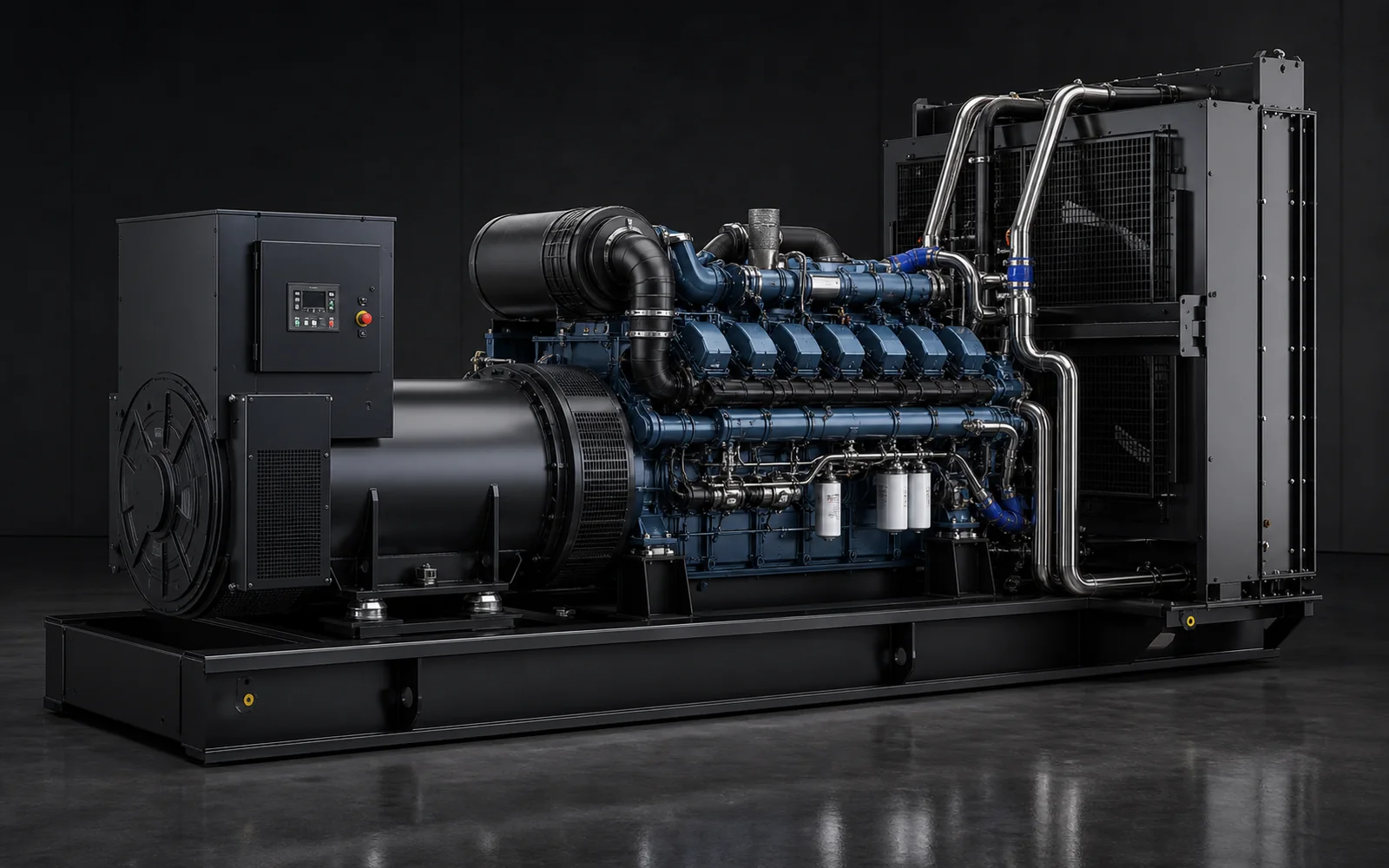
The control panel is the part of a generator set that most buyers see least and regret most when it is wrong. Trade coverage through late October 2026 keeps circling the same pressure point - grid constraints pushing data centers and industrial sites toward on-site generation (Power Engineering International's ongoing reporting on data-center delays from grid limits, and the Black Hills-Google microgrid build for a Wyoming data center, both dated around 2026-10-24) - which means more buyers are specifying standby and prime sets and trusting the panel to do its job on the first real outage. This guide covers what a generator control panel actually does, which auto-start and monitoring functions to confirm, which fault protections to require, how to verify it in the factory, and the red flags that mean you should not sign.
What does a generator control panel actually do?
The control panel is the brain of the set. It starts and stops the engine, monitors voltage, frequency, oil pressure, coolant temperature, battery and fuel level, and - on a standby set - watches the utility supply and starts the generator when mains power fails (automatic mains failure, or AMF). Once the set is stable, it signals the transfer switch to move your load onto the generator, and reverses the sequence when utility power returns. The hard fact buyers miss: the panel and the transfer switch are two separate items. The panel decides when to start; the switch decides when to move the load. A set can have a perfect engine and still leave you dark if the panel cannot command the switch, or if the two were never coordinated.
Does an auto-start panel mean my load switches over with no action?
Almost, but the word 'almost' is where projects go wrong. AMF auto-start removes the need for a person to press a button during an outage, and that is real value. But auto-start on the generator does not by itself move your building load - that handoff is the transfer switch's job, and the two have to be wired and set so the panel's start signal, the engine run-up time and the switch transfer happen in the right order. If your supplier sizes or programs them separately, you can get a generator that runs happily while your critical load stays on dead utility or drops out entirely. Confirm the panel supports AMF and that the same supplier is responsible for the panel-to-switch coordination drawing (https://linkpowergenset.com/en/products/), not two vendors pointing at each other.
How do I verify the control panel before buying?
Verify from the controller datasheet, the coordination drawing and a factory test - not the sales sheet. A practical checklist: (1) Get the exact controller make and model and its datasheet; confirm it is a recognised AMF controller, not a basic manual-start unit dressed up in marketing. (2) Confirm the protections it enforces - under/over voltage, under/over frequency, overcurrent, overload, overspeed, low oil pressure, high coolant temperature, failure-to-start - and ask for them listed in writing. (3) Confirm what you can see and do locally: a display showing live volts, amps, frequency, run hours and fault history; push buttons for test, stop, manual start. (4) Confirm remote options: RS485/Modbus for building integration, and - if you need it - a cellular (4G) or Ethernet gateway for off-site alarms and status; request the communication protocol document. (5) Confirm the panel enclosure rating for its location and verify it against the site - a panel rated for a clean indoor switchroom is not the same as one rated for a dusty or outdoor pad; ask for the rating and the certificate. (6) Require a factory acceptance test that simulates a mains failure and proves the set starts, stabilises and the load transfers, delivered as a signed record, not a promise. (7) Confirm spare-module and service availability before you pay, including how a fault is diagnosed remotely and what lead time a replacement controller carries. LINKPOWER builds complete sets with the controller, engine and transfer coordination tested together in the factory (https://linkpowergenset.com/en/factory/), across Weichai, Yuchai and SDEC engines in open, silent, mobile and containerized formats (https://linkpowergenset.com/en/products/), so the panel-to-switch sequence is proven before crating rather than discovered on site.
When should I walk away from a control panel offer?
Walk away, or pause hard, if the supplier: cannot name the controller make and model or show a datasheet; sells 'automatic' with no AMF function and no listed fault protections; splits responsibility so the panel comes from one vendor and the transfer switch from another with no coordination drawing; has no local display or fault history; offers no remote or building-integration option when your site needs one; quotes a sealed, non-serviceable panel with no spare-module path; or cannot show a factory test where the set actually started on a simulated mains failure. A supplier that builds and exports complete packages hands you the controller datasheet, the coordination drawing and the test record in the same reply. One that cannot is asking you to find out during your first real blackout - when the engine is fine and the panel is silent.
How LINKPOWER specifies and tests the control system
LINKPOWER is a factory-direct builder of diesel generator sets with Weichai, Yuchai and SDEC engines, in open, silent, mobile-trailer and containerized formats (https://linkpowergenset.com/en/products/), so the control panel, engine and transfer switch are specified as one system. A silent standby set for a commercial building or hospital carries its controller and ATS in a coordinated arrangement (https://linkpowergenset.com/en/products/silent-diesel-generator/, https://linkpowergenset.com/en/applications/commercial-buildings/, https://linkpowergenset.com/en/applications/hospital/); a containerized unit for a factory or infrastructure site can integrate the switchgear and panel in the same envelope (https://linkpowergenset.com/en/products/containerized-power-system/, https://linkpowergenset.com/en/applications/factory/). The simulated-mains-failure start and transfer are exercised in the factory acceptance test before shipping, and the coordination drawing is issued with the set. See the full product range (https://linkpowergenset.com/en/products/) and the factory test process (https://linkpowergenset.com/en/factory/).
FAQ
Which controller functions matter most for a standby set? AMF auto-start and a clear fault list matter most - the set must start on mains loss and tell you why it stopped. Remote alarms are a close second for sites with no permanent operator.
Can I add monitoring to an existing generator later? You can add a gateway or external controller, but the engine wiring, sensor points and breaker coordination have to support it; confirm the existing panel has the sensor inputs and communication port before you assume a retrofit is cheap.
How do I know the protections are actually enforced? Require the controller datasheet listing each protection and a factory test record where a fault was induced and the set responded. A claim on a brochure is not a test.
What we need from you
Send the load type (standby or prime), whether the set must auto-start on mains failure, the building or site integration you need (RS485/Modbus, 4G alarm), and the installation environment for the panel. We confirm the controller model and its protections, issue the panel-to-switch coordination drawing, run the simulated-mains-failure test in factory acceptance, and return a quotation for a matched set - not an engine with a panel bolted on afterwards. Start the configuration from the full product range (https://linkpowergenset.com/en/products/) and the factory test process (https://linkpowergenset.com/en/factory/).