A transfer switch is the component that actually keeps your lights on when the grid fails - and it is the part buyers most often leave to chance. On 2026-10-24 the trade press is still dominated by grid-constraint and on-site-power stories (Power Engineering International's coverage of data-center delays from grid limits, and the Black Hills-Google microgrid build for a Wyoming data center), which keeps pushing the same buyer question our way: if I buy a standby generator, how do I know the switch that moves my load to it will do its job on the night it matters? This guide covers what an automatic transfer switch (ATS) does, why the open- versus closed-transition choice is not cosmetic, the rating and standard you should request, the factory and coordination checks to run, and the red flags that mean you should not sign.
What does an automatic transfer switch actually do?
A standby generator does not power your building by itself. The ATS sits between your utility service and your load, watches the utility voltage, and when that voltage falls outside tolerance it tells the generator to start. Once the generator is stable at the right frequency and voltage, the ATS breaks the utility connection and connects your load to the generator - then reverses the whole sequence when utility power returns. The hard fact buyers miss: there is almost always a moment of load interruption, and how long that moment is, and whether it exists at all, depends on the transition type. An open-transition (break-before-make) switch drops the load for a fraction of a second to a few seconds; a closed-transition (make-before-break) switch overlaps the two sources so there is no interruption, but only if your utility permits parallel operation. Both are legitimate; they are not interchangeable, and the choice drives cost, wiring and approvals.
Does a bigger ATS rating make my standby system safer?
No - and oversizing is one of the more expensive mistakes buyers make. The ATS current rating has to match the load it actually serves, including the largest motor or transformer inrush, not the generator's nameplate kVA. An ATS rated far above the real load costs more, can be physically harder to mount, and - more importantly - can sit outside the coordination band with the generator and utility breakers, so the whole system trips or refuses to transfer at the worst time. The real safety question is coordination, not size: the ATS, the generator breaker and the utility breaker have to be set so each one clears a fault without stepping on the others. 'Automatic' also does not mean 'untended' - an ATS that is never exercised will still fail, so the verification work below applies whether the unit is open- or closed-transition.
How do I verify the ATS before buying?
Verify from drawings, certificates and a factory test - not the salesman's assurance. A practical checklist: (1) Confirm the continuous and withstand current rating against your actual served load and motor inrush, not the genset kVA; ask for the figure in amps. (2) Confirm which standard applies to your market - UL 1008 is the common US reference, IEC 60947-6-1 the international one - and request the certificate from a recognised listing body, then check the body is one your authority having jurisdiction (AHJ) accepts. (3) Request the single-line and coordination drawing showing the ATS, generator breaker and utility breaker together, with the time delays between utility-loss detection, engine start, transfer and retransfer stated. (4) Confirm the transition type and the measured switching time, and - if anyone offers closed-transition - confirm in writing that your utility allows it before you pay for the feature. (5) Require a factory acceptance test that exercises transfer and retransfer under a representative load, ideally witnessed or at minimum delivered as a signed record. (6) Confirm the enclosure rating for where it will live - an outdoor, dust- or washdown-exposed location needs a different rating than a clean indoor switchroom; ask the supplier for the rating and verify it matches the site. LINKPOWER supplies matched generator-and-ATS packages and runs the transfer test in the factory acceptance before crating, with the coordination drawing issued as part of the documentation (https://linkpowergenset.com/en/factory/); engine options span Weichai, Yuchai and SDEC across open, silent, mobile and containerized formats (https://linkpowergenset.com/en/products/).
When should I walk away from an ATS offer?
Walk away, or pause hard, if the supplier: cannot name a standard certificate for your market and a listing body your AHJ accepts; sizes the ATS straight from generator kVA with no load or inrush check; has no single-line or coordination drawing and answers 'it just works'; offers a sealed, non-serviceable unit with no spare-contact or service path; quotes far below market with no warranty terms or test record; or promises closed-transition transfer without confirming your utility will allow paralleling. A supplier that builds and exports complete packages hands you the certificate, the drawing and the test record in the same reply. One that cannot is asking you to discover the gap during your first real outage - when the generator is running but your load is still dark.
How LINKPOWER builds matched genset and ATS packages
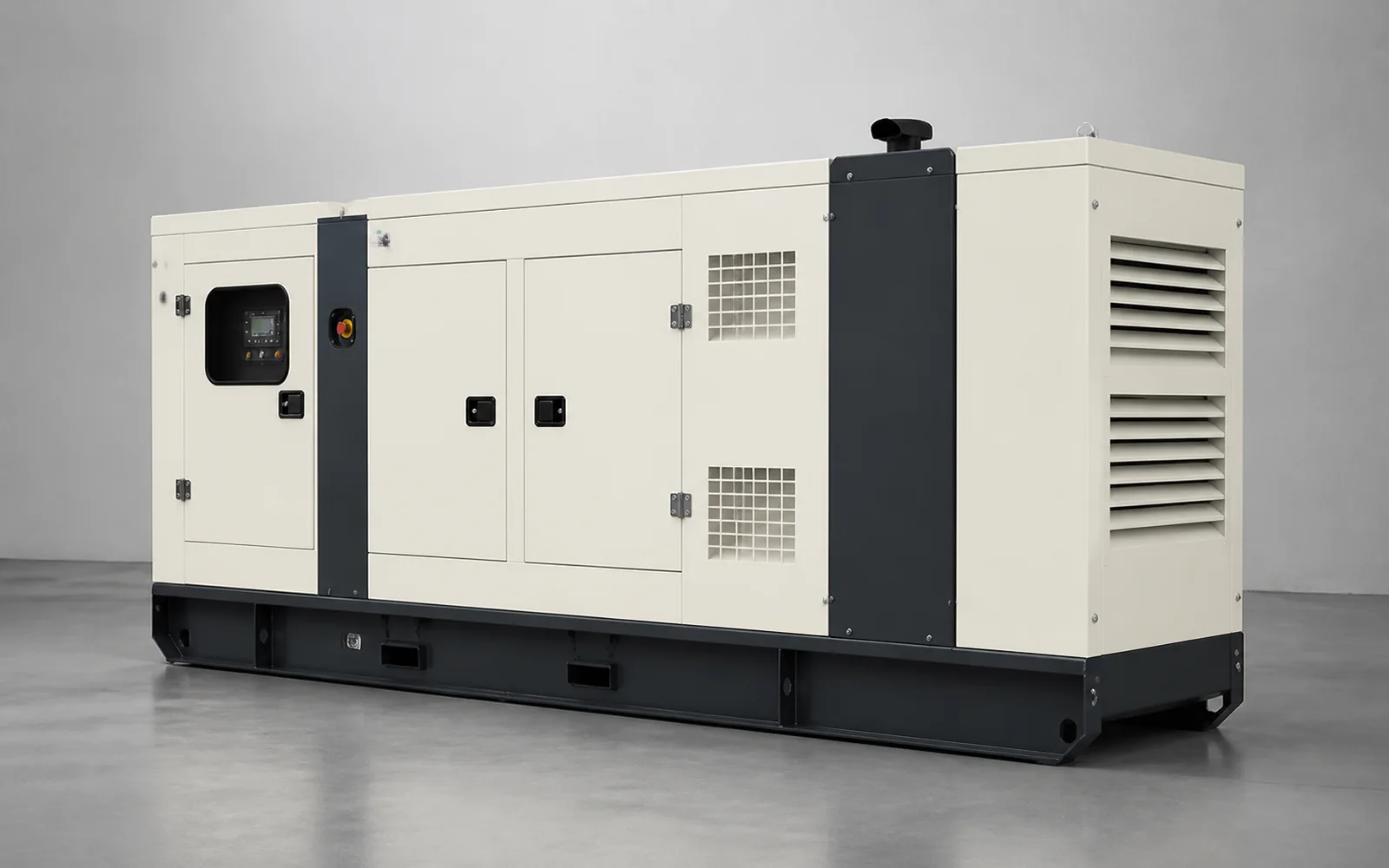
LINKPOWER is a factory-direct builder of diesel generator sets with Weichai, Yuchai and SDEC engines, in open, silent, mobile-trailer and containerized formats, so the ATS and the set are specified as one system rather than bolted together after the fact. A silent standby set for a commercial building or hospital carries its ATS in a coordinated indoor or weatherproof arrangement (https://linkpowergenset.com/en/products/silent-diesel-generator/, https://linkpowergenset.com/en/applications/commercial-buildings/, https://linkpowergenset.com/en/applications/hospital/); a containerized unit for a factory or infrastructure site can integrate the switchgear in the same envelope (https://linkpowergenset.com/en/products/containerized-power-system/, https://linkpowergenset.com/en/applications/factory/). The transfer and retransfer are exercised in the factory acceptance test before shipping, and the coordination drawing is issued with the set. See the full product range (https://linkpowergenset.com/en/products/) and the factory test process (https://linkpowergenset.com/en/factory/).
FAQ
Open-transition or closed-transition - which do I need? Open-transition is the default and is enough for almost every standby application where a brief load break is acceptable. Choose closed-transition only if a continuous process cannot tolerate any break and your utility has approved paralleling - otherwise you are paying for a feature you cannot legally use.
How often should the ATS be exercised? Most specs call for a monthly test with a real transfer to the generator, plus an annual full-load test; confirm the interval your local code or insurer requires and write it into the service plan.
Can I add an ATS to an existing generator later? You can, but the breaker coordination, enclosure and cabling have to be re-done for the combined system, so it costs more than specifying it with the original set. If the generator is already installed, have the supplier review the existing breaker ratings before quoting.
What enclosure rating do I need? Match it to the location: a clean indoor switchroom needs far less than an outdoor, dusty or washdown-exposed pad. Ask the supplier for the rating and confirm it against the site, not the catalogue default.
What we need from you
Send the served load list with the largest motor inrush, the utility supply details, whether your AHJ requires a named standard (UL 1008 or IEC 60947-6-1), and whether the site allows closed-transition transfer. We confirm the ATS rating against your real load, issue the coordination drawing, run the transfer test in factory acceptance, and return a quotation for a matched genset-and-ATS package - not a generator with a switch bolted on afterwards. Start the configuration from the full product range (https://linkpowergenset.com/en/products/) and the factory test process (https://linkpowergenset.com/en/factory/).