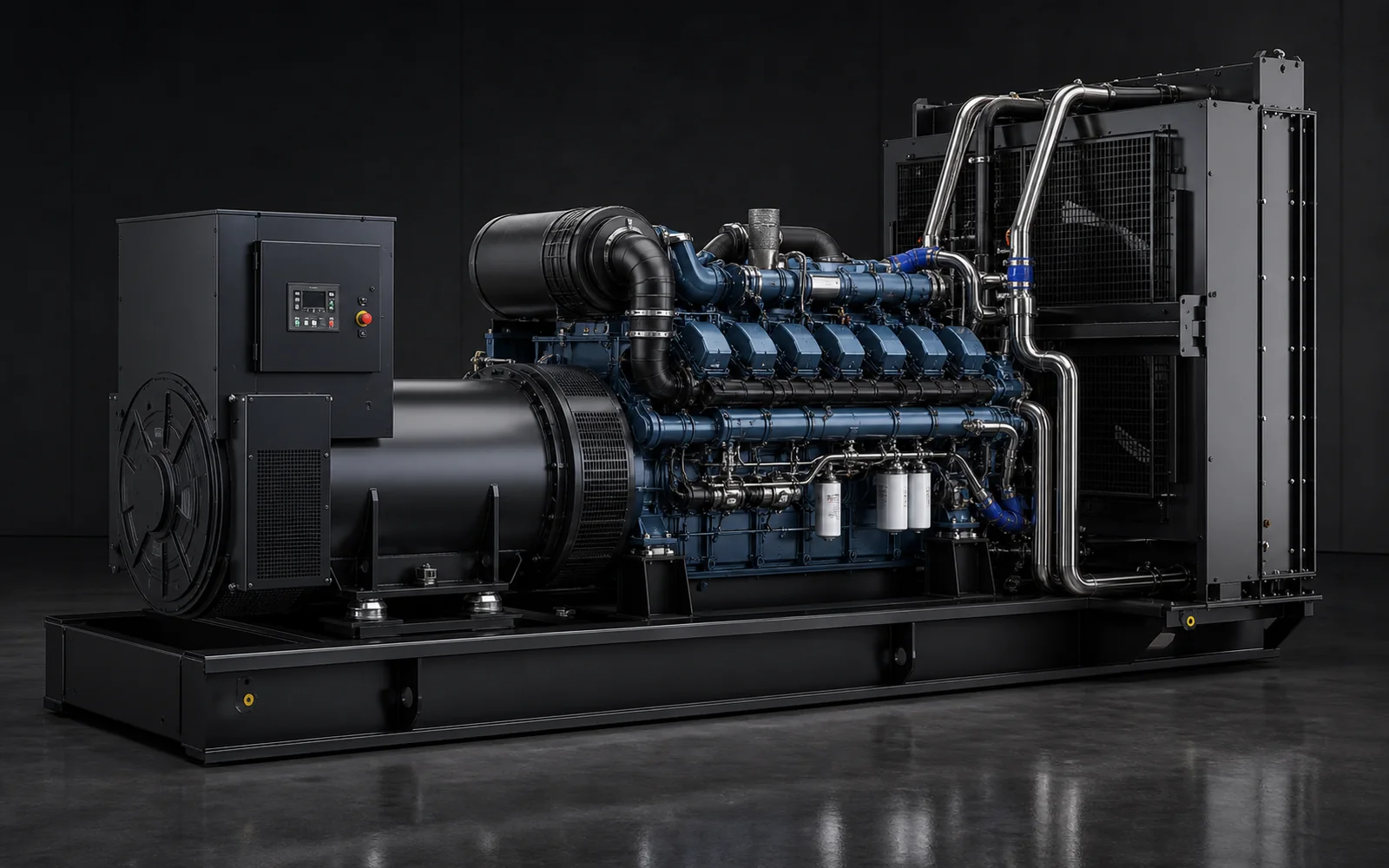
On 2026-11-03 the power-industry feeds were again full of gas turbines, solar farms and batteries - none about the component inside a diesel set that actually makes the electricity. The alternator is the part buyers ask about least and regret most when it fails. This guide covers what the alternator does, the brushless-versus-brushed choice that decides your maintenance load for the next decade, and the checks that prove you are getting the electrical end your project needs before you pay.
What does the alternator actually do in a generator set?
Conclusion first: the engine makes rotating mechanical power; the alternator turns that rotation into the regulated AC electricity your building actually uses. The diesel engine, fuel system and cooling are the muscle; the alternator is the part that decides whether the voltage holds when a motor starts, whether the set survives a dusty or coastal site, and how often you open the electrical end for service. A set is only as reliable as its alternator, yet most quotations hide it behind a single line - 'brushless alternator fitted' - with no model, no rating and no test evidence.
The alternator's key numbers are the rated power it can carry continuously, the voltage regulation it holds under load steps, the subtransient reactance that sets how far voltage dips when a large motor starts, and the protection class (IP and insulation) that decides how well it shrugs off heat, dust and moisture. You need to know which of these to put on the RFQ and which certificate to ask for.
Brushless or brushed - what's the real difference, and which should my project use?
Short answer: for almost every modern diesel set, brushless wins, and brushed alternators now show up mainly on older units or cheap sets where the cost gap still matters. A brushed alternator passes excitation current through carbon brushes riding on a slip ring; a brushless unit uses a rotating exciter and diode bridge inside the rotor, so no brush-to-ring contact wears out. The practical difference is maintenance: brushed sets need brush inspection and replacement on a schedule, and brushes are the first thing to fail in dust, humidity or high altitude where the slip ring carbonizes.
Where a brushed unit can still make sense is narrow: a very small set where the alternator cost dominates, or a legacy machine where spares and workshop familiarity already exist. For construction, mining, telecom, hospital and rental fleets - the sites that define most LINKPOWER projects - brushless is the default because the electrical end then asks for almost no scheduled attention between overhauls. If a supplier proposes brushed above a few kVA, ask them to justify it in writing.
On top of brushless-versus-brushed, three specs decide fit: the bearing arrangement (single-bearing couples it to the engine; double-bearing sits on its own base and tolerates more misalignment), the voltage regulator type (an electronic AVR holds voltage through load steps far better than a basic regulator), and the subtransient reactance, which is the number that decides whether your largest motor will start without the lights dimming. Read why that last figure matters for motor starting (https://linkpowergenset.com/en/news/generator-sizing-for-motor-start/).
Does a brushless alternator mean I never touch the electrical end?
No, and believing that is how sets get stranded. Brushless removes the wear item that needed the most frequent attention, but the alternator still has bearings, an AVR, winding insulation and a cooling path. Bearings still fail, the AVR can still be damaged by a short or a surge, and insulation still ages with heat and moisture. What brushless changes is the service rhythm: instead of monthly brush checks, you are looking at bearing and insulation checks on an overhaul interval, not a weekly one.
This is also where the enclosure choice interacts with the alternator. An open-type set (https://linkpowergenset.com/en/products/open-type-generator/) exposes the alternator to the engine room, so the alternator's own protection class and the room's ventilation matter; a silent or containerized set wraps it in a weather-resistant shell that protects it from rain and dust but traps heat, so the alternator's temperature rise and cooling must be confirmed for the packaged rating, not the bare-nameplate one.
How do I verify the alternator before I buy?
Put these on the RFQ and treat a blank 'brushless alternator' line as unfinished: (1) Ask for the alternator brand and exact model, not just 'brushless' - buyers commonly name Leroy Somer, Stamford, Marathon or equivalent, and the model tells you the service network and spares. (2) Request the alternator datasheet showing rated kVA, power factor, voltage regulation, subtransient reactance and the protection class (IP and insulation temperature class). (3) Ask for the alternator type-test certificate to a recognized standard such as IEC 60034 or the relevant ISO 8528-3 alternator clauses, and an insulation-resistance and no-load-to-full-load voltage-regulation test at factory acceptance. (4) Confirm the bearing arrangement and whether the rated output is the packaged rating after the enclosure's cooling penalty, because a silent set's alternator may be de-rated versus the open nameplate. (5) Confirm spares - AVRs, bearings, even rotor or stator assemblies - are obtainable for the model you are buying, because a discontinued alternator turns a small fault into a long outage; see how we handle alternator and engine spares (https://linkpowergenset.com/en/news/generator-spare-parts-availability/). (6) LINKPOWER fits brushless alternators as standard across open, silent, mobile and containerized sets (https://linkpowergenset.com/en/products/), configures the model to the project's voltage, power factor and starting duty, and supplies the alternator datasheet and factory test report with the order so the electrical end is documented, not assumed (https://linkpowergenset.com/en/factory/).
When should I walk away from an alternator spec?
Walk if the quotation lists 'alternator' with no brand, no model and no rating - you cannot verify what you cannot name. Walk if the supplier quotes a brushless set but cannot state the subtransient reactance or voltage regulation you need for your motor-starting duty, because that silence usually means they have not checked it against your load. Walk if the protection class (IP and insulation) is left to 'standard' with no number you can match to your site's dust, humidity or altitude. And walk from any claim that 'brushless means maintenance-free' - no alternator is; the claim tells you the seller is selling a slogan, not an electrical end they can document.
The practical takeaway
The alternator is the half of the set that makes the power, and brushless is the right default for almost every project because it removes the wear item that fails first in harsh sites. What you must still pin down in writing is the brand and model, the rated and packaged output, the subtransient reactance for your starting duty, and the IP and insulation class for your environment - plus proof the model's spares are still obtainable. Get the datasheet and the factory test report, not a one-word 'brushless' line. Compare the full product range (https://linkpowergenset.com/en/products/) and the factory build and test process (https://linkpowergenset.com/en/factory/), and read how the alternator's reactance feeds your motor-starting calculation (https://linkpowergenset.com/en/news/generator-sizing-for-motor-start/). LINKPOWER documents the electrical end with the order so the set is verified before it runs, not after it trips.
FAQ
Is brushless always better than brushed? For anything above a few kVA and any site with dust, humidity or altitude, yes - brushless removes the brushes that fail first. Brushed survives only on tiny, cheap or legacy sets where the cost gap still matters and the workshop already stocks brushes. Ask the seller to justify brushed in writing above that range.
Does a bigger alternator kVA mean more reliable? Not by itself. Oversizing can help motor starting, but reliability comes from the protection class, bearing quality, AVR and spares availability, not nameplate kVA alone. Size to your actual duty and starting load, then confirm the supporting specs.
How do I know the alternator won't overheat in my silent enclosure? Ask for the packaged rating after the enclosure's cooling penalty and the alternator's temperature-rise class. A silent set's alternator is often de-rated versus its open nameplate, so match the quoted output to the packaged number, not the bare alternator figure.
What we need from you
Send the rated power, voltage, frequency, power factor, the largest motor and its starting method, and the site environment (dust, humidity, altitude, ambient). We confirm whether brushless is the right choice, select the alternator model and bearing arrangement, state the packaged rating and subtransient reactance, and supply the datasheet and factory test report with the order. Start from the product range (https://linkpowergenset.com/en/products/) and the factory process (https://linkpowergenset.com/en/factory/), or the applications we configure for (https://linkpowergenset.com/en/applications/).