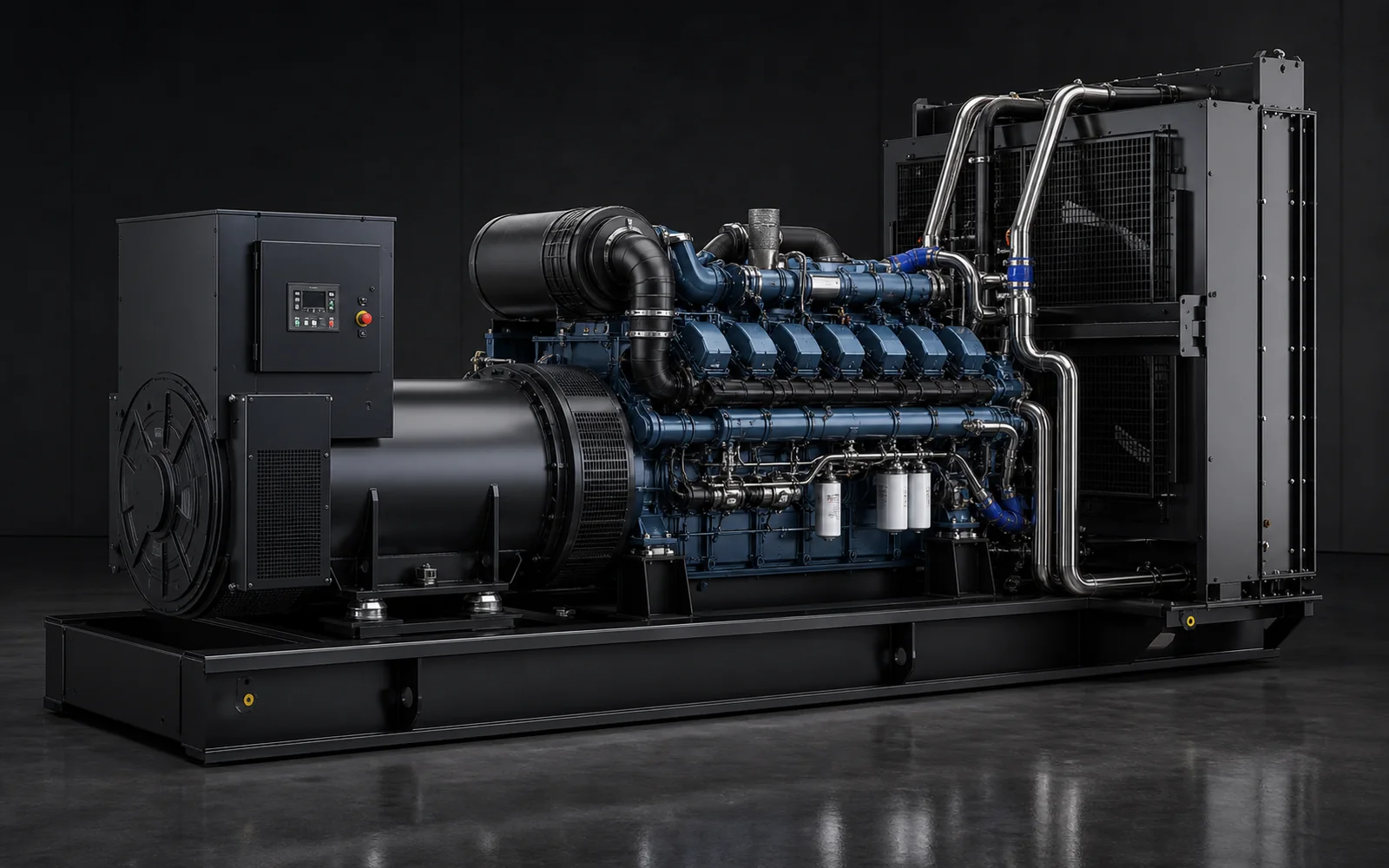
Fuel choice used to be the most boring line on a generator specification. You picked diesel, sized the tank, and moved on. That has changed. Decarbonization targets, tighter procurement rules and a wave of 'green diesel' headlines have put fuel back on the table for standby and prime-power buyers alike. The fuel getting the most attention is HVO - hydrotreated vegetable oil - sold as a renewable diesel that can replace mineral diesel with little or no modification. The pitch is attractive, but for a buyer the right question is narrower than 'is HVO good?'. It is 'will this specific set, at this rating, on this duty, run on HVO, and what paperwork proves it?'
What HVO is, and why it gets called a drop-in
HVO is a paraffinic diesel made by hydrotreating waste oils, fats and vegetable feedstocks. Chemically it sits much closer to fossil diesel than older FAME biodiesel does - low aromatics, good cold-flow behaviour and stable storage without the degradation that has hurt FAME in long-term tanks. Used within a credible supply chain, it can cut well-to-tank carbon against mineral diesel. None of that is in dispute. The catch is the word 'can'. Whether a given engine accepts it depends on the engine manufacturer's own fuel approvals and on the delivered fuel meeting a defined specification, not on the marketing term. A renewable fuel that is not approved for your engine is still the wrong fuel for that machine.
Drop-in is a claim to verify, not a switch to make
A generating set is an engine, a fuel system, filtration, seals, hoses and controls - and every engine platform publishes its own fuel approvals, which differ by model, model year and rating. Before anyone assumes a set runs on HVO, the buyer should ask the supplier for the engine maker's written HVO or renewable-diesel approval at the exact duty involved, because standby and prime operation place different demands on the fuel system. Some engines need no hardware change; others call for seal or hose material checks, filter upgrades or a calibration note. Treat 'HVO-ready' in a brochure as a reason to request the approval letter, not as the answer. The engine-driven open-type sets make the fuel system easy to specify and service: https://linkpowergenset.com/en/products/open-type-generator/.
Diesel still wins on three things buyers forget
Availability, energy density per tank, and the familiarity of every local technician. HVO is not stocked at every remote depot, and a site that cannot get HVO for a week still has to run. That is why many operators run a dual-fuel posture rather than a hard switch: keep mineral diesel as the dependable base and blend or substitute HVO where supply, price and carbon goals line up. For enclosed outdoor installations the acoustic package and integral fuel tank are unaffected by the fuel choice - the only real question is the engine approval underneath. See the silent diesel generator range for weather-resistant, low-noise packages: https://linkpowergenset.com/en/products/silent-diesel-generator/.
What to ask the supplier before committing to HVO
A short verification list keeps quotes comparable and protects the buyer: (1) the engine maker's written HVO approval for the exact model and rating, naming the acceptable fuel specification such as EN 15940 for paraffinic diesel or the local equivalent; (2) any blend limit with mineral diesel and how it is verified at the pump; (3) fuel-system material compatibility at your expected run hours - seals and hoses age differently on different fuels; (4) the effect on emission documentation for your destination market - request the applicable emission stage documents from the supplier rather than assuming the diesel approval carries over; and (5) the warranty position if HVO is used in service. Put these points in the RFQ so two suppliers are bidding on the same facts. For continuous industrial duty, tie the fuel decision to the load profile and site conditions laid out in the factory application notes: https://linkpowergenset.com/en/applications/factory/.
FAQ
Is HVO better than diesel for generators? It can lower well-to-tank carbon and stores more stably than FAME biodiesel, but it must be approved for your specific engine and rating, and supply is not universal. Verify the approval letter before switching rather than assuming the label is enough.
Can I mix HVO with normal diesel? Many engines approved for HVO allow blending with mineral diesel up to a stated limit, but the limit and the fuel specification must come from the engine maker's written approval, not from a general assumption. The supplier should state it in the quotation.
Does running HVO change my emission compliance? A fuel change can affect the basis of emission documentation, so request the applicable emission stage documents for your destination market from the supplier instead of assuming the diesel approval still applies. Treat emission compliance as a document to obtain, not a property to assume.
Send the engine model, rating, duty and destination - and tell us whether HVO supply actually exists at your site
LINKPOWER will confirm the fuel-approval position for the engine in question and return a configuration - open, silent or containerized - with the verification documents and export plan stated before you commit. If HVO supply is uncertain at your location, we will size a dual-fuel posture so the set keeps running regardless of which diesel is in the tank.