Solar capacity is being financed at a pace that would have looked unrealistic a decade ago. On 13 October 2026, Power Technology reported that NOPL secured a $307m loan from IREDA to build a solar project in India - one of many large renewable financings closing worldwide this year. The instinct of many procurement teams is to read headlines like this and conclude that diesel generator sets are on the way out. They are not, and the reason matters for anyone specifying power for a solar, wind or hybrid site. A generator set earns its place wherever the sun does not shine on demand, the grid is weak or absent, or a project has to be built before it is connected.
Do solar farms replace diesel generators?
Short answer: no, they complement them. A photovoltaic plant produces nothing at night and little under cloud, and its output drops to zero the moment it disconnects for safety during a grid fault. The diesel set is the asset that carries load when the renewable source cannot - during commissioning, during a blackout, and during the long stretches of a remote site's operating life when the grid is unreliable. Treating solar and diesel as rivals misses how real plants are actually run.
Where a diesel set earns its place on a solar or renewable project
Four situations come up on almost every large renewable build, and each one is a job a generator set is built to do.
Construction and commissioning power, before the grid arrives
A solar farm is built by crews who need welding, lighting, tooling and office power for months before the array is energized - the same goes for access roads, fencing and inverter stations. A trailer-mounted set (https://linkpowergenset.com/en/products/mobile-trailer-generator/) or a containerized package supplies that temporary power on a site with no connection yet. Size this from the construction load list, not from the eventual plant rating; the two are different jobs with different starting loads.
Weak-grid and hybrid duty: filling the gaps
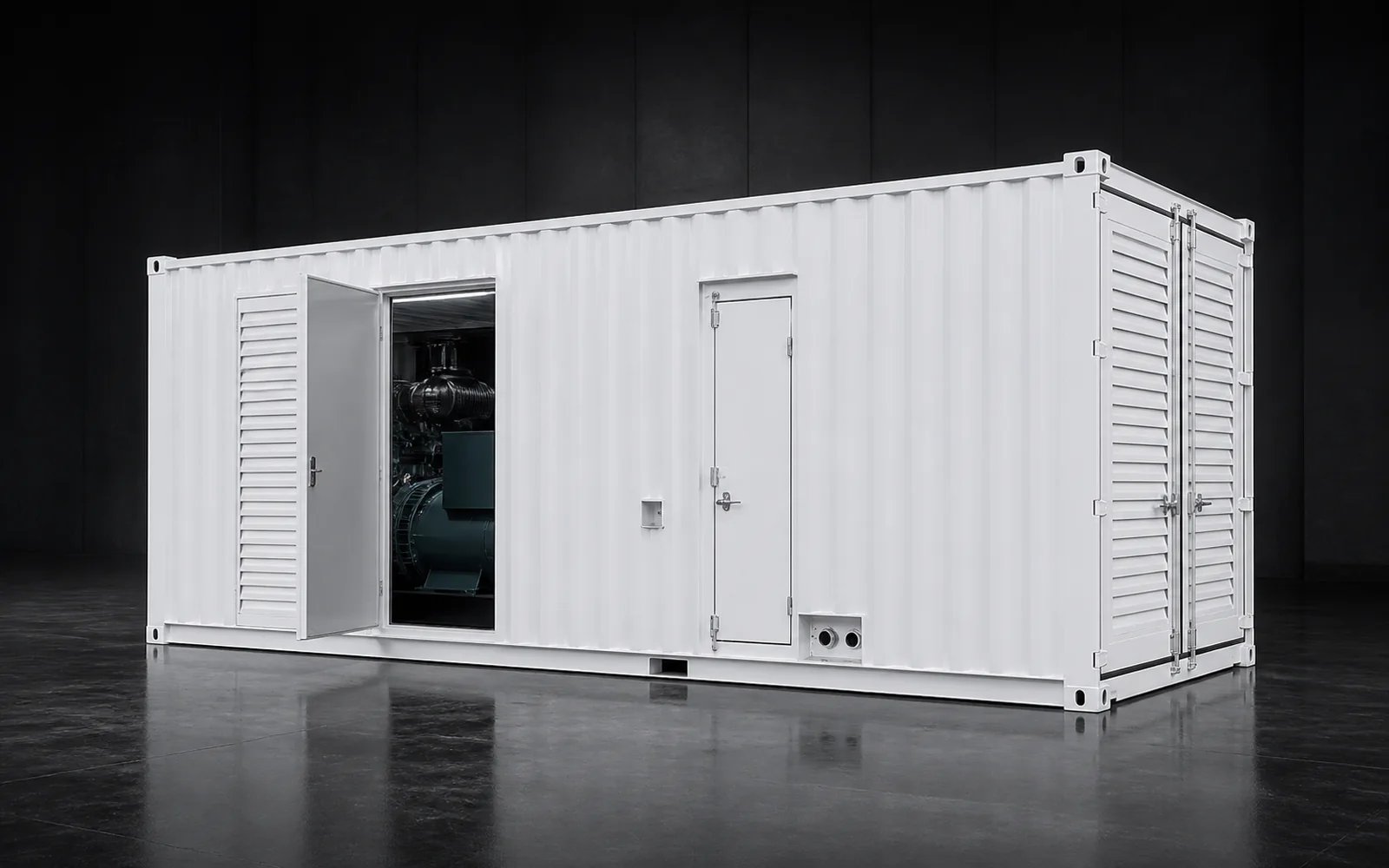
In many growth markets the local grid is present but unstable - voltage swings, frequent outages, limited fault capacity. Here a diesel set runs in parallel with the solar inverter or as a peak and backup source, smoothing the gaps so the plant and any nearby load keep running. Containerized power systems (https://linkpowergenset.com/en/products/containerized-power-system/) with synchronizing controls are the usual fit for this duty, and the control scheme - auto-start, load sharing, transition behavior - should be confirmed against the site's actual grid, not assumed.
Black start and critical-load backup
Some sites must restart their own systems after a total outage, or keep critical balance-of-plant alive during a blackout: control rooms, communications, security, water pumps. A standby set sized for that critical load, with the right transfer arrangement, is what makes 'the plant stays manageable during the event' true. Confirm whether the project needs black-start capability at all; if it does, the set and its controls must be specified for it from day one. See how renewable and infrastructure sites are mapped: https://linkpowergenset.com/en/applications/infrastructure/.
How do I verify the generator spec for a solar or hybrid project?
Request the documents and figures that prove the set fits your duty, and write them into the contract. The buyer's verification checklist: Emission stage - ask for the applicable emission stage (EU Stage V, US EPA Tier 4, China NR-IV or your local equivalent) and the test report; do not accept a blanket 'compliant' label. Ingress protection - confirm the IP rating of the package and enclosures for dust, rain and site conditions. Noise - state your target noise level at the boundary and request the test report at rated load. Fuel and autonomy - confirm fuel grade, tank capacity and run time for the duty. Controls - confirm auto-start, load sharing and transition behavior with the inverter and grid. Factory acceptance - request a load-bank or synchronized test report before shipment.
What LINKPOWER configures, and how we prove it
LINKPOWER supplies open, silent, trailer-mounted and containerized sets across Weichai (https://linkpowergenset.com/en/products/weichai-diesel-generator/), Yuchai (https://linkpowergenset.com/en/products/yuchai-diesel-generator/) and SDEC (https://linkpowergenset.com/en/products/sdec-diesel-generator/) engine platforms, and configures each unit to the project's load, duty, ambient and grid behavior rather than shipping a catalogue model. Every set is run under load as part of factory acceptance (see the manufacturing process: https://linkpowergenset.com/en/factory/), and the test result is stated in the handover so the figure on the quotation is the figure the set actually met. For export projects, documentation, packing and shipping scope are agreed before order. Send the load list, duty hours, site ambient and grid condition and we return a project quotation with the verification points above answered in figures.
When should I walk away from a 'solar means no diesel' claim?
Be cautious when a supplier implies a solar or renewable project needs no backup at all. Walk away or press harder if: the site has no grid connection during construction and no temporary power plan; the local grid is known unstable but no hybrid duty is specified; black-start or critical-load backup is implied but not written into the spec; or any emission, IP or noise claim is stated as fact without a document you can verify. A credible supplier answers these in numbers and files, not reassurance.
FAQ
Can a diesel generator run alongside solar panels? Yes - in hybrid duty the set can parallel with the inverter or act as backup, carrying load when solar output drops. Confirm the control and synchronizing scheme with the supplier for your specific grid.
What size generator does a solar farm need? It depends on the job. Construction temp power, critical backup and hybrid base load each size differently. Provide the load list and duty; do not size from the plant's nameplate capacity alone.
Do I need emissions documentation for a project generator? Ask for the applicable emission stage and test report for your market and write it into the contract; do not assume a generic 'compliant' label covers your project.
What we need from you
Send your load list, expected duty hours, lowest site ambient, and a description of the local grid (stable, weak, or absent during construction). We will specify the package, engine platform, controls and factory-test scope, then return a project quotation - with emission stage, IP rating, noise target and spare-parts lead time stated before you order.