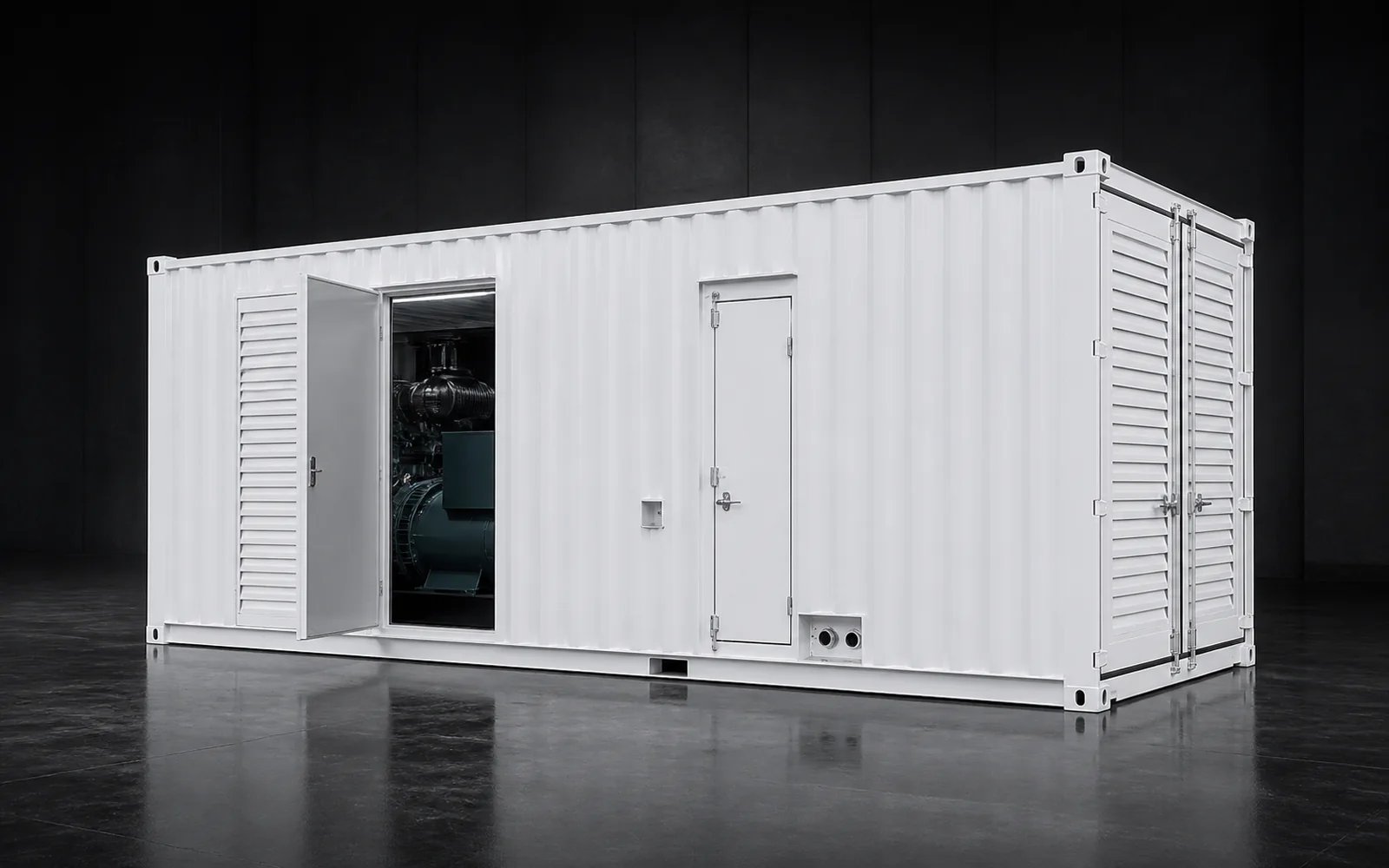
New data centers are being planned faster than the grids around them can add capacity. Several operators have started looking at generating at least part of their power on-site, behind the meter, instead of waiting years for a transmission upgrade or a new interconnection. That shift brings diesel and gas generator sets back into the conversation - not as a replacement for the utility, but as firm, dispatchable capacity the operator controls. This article is written for the people who have to specify that capacity: what the duty really is, which package fits the site, and which papers you should ask the supplier for before you sign.
Why behind-the-meter generation is back on the table
When a grid connection is delayed, the cost is not just schedule slip - it is revenue and service-level agreements that cannot be met. On-site generation lets a campus carry load the moment it is commissioned, independent of how far the utility queue has moved. The set does not have to run the whole facility at full output forever; in many designs it carries the critical IT load, or it runs as firm capacity during peaks and grid events. The buying mistake is treating this like a standard standby purchase. A set that sits idle and starts once a year is specified very differently from one that earns its keep with regular run hours, and the difference shows up in cooling, maintenance and engine choice.
Define the duty before you size anything
The first question any supplier should answer is whether the set runs as standby (rare starts, full load on outage) or prime/continuous (regular run hours, often alongside or instead of the grid). That decision drives the engine rating, the cooling system, the service interval and the fuel tank size. LINKPOWER sizes each project against the stated duty and site conditions rather than a catalogue number, and the difference between a standby and a prime rating on the same frame is large enough that guessing wastes both money and reliability. For a campus, spell out the expected run hours per year and the load profile - a block load, a ramped load, or a steady base - because step loading stresses the engine and alternator in different ways. The applications notes for commercial and infrastructure sites cover how duty and load shape the configuration: https://linkpowergenset.com/en/applications/commercial-buildings/ and https://linkpowergenset.com/en/applications/infrastructure/.
Pick the package that fits a data-center campus
A data-center site usually has three constraints at once: limited space, a noise limit set by neighbours or planning, and a need to deploy fast. Containerized power systems are the common answer because the generator, switchgear, fuel and ventilation arrive as one tested unit that drops onto a prepared pad - useful when the schedule is the whole point. Where the campus has a built plant room, open-type sets give the easiest service access and the best ventilation control. Silent enclosures matter where the site sits near offices or housing, and mobile trailer sets earn their place during commissioning and as a staged reserve while permanent capacity is built. Each form is a trade between access, weather protection and acoustic performance, and the right one depends on where the set lives: https://linkpowergenset.com/en/products/containerized-power-system/, https://linkpowergenset.com/en/products/open-type-generator/, https://linkpowergenset.com/en/products/silent-diesel-generator/, https://linkpowergenset.com/en/products/mobile-trailer-generator/.
Engines, and the documents you must verify
Most buyers choose between established engine platforms rather than chasing a single brand. Weichai, Yuchai and SDEC engines are widely used in exported generator sets, and the practical question is which one matches your duty, parts network and budget - not which name sounds best. Whatever you choose, do not accept emissions or compliance as a verbal promise. Ask the supplier for the applicable emission-stage document for your destination market (for example EU Stage V, US EPA Tier 4 or China NR-IV, whichever applies to you), the IP protection marking for the enclosure, and the factory as-tested report. Request these as papers to obtain and verify, not as assumptions printed on a brochure - the right number depends on where the set is installed and which market it ships to. LINKPOWER builds and load-tests each set at the factory and ships the as-tested report with the unit: https://linkpowergenset.com/en/factory/. Engine-specific pages for project comparison are here: https://linkpowergenset.com/en/products/weichai-diesel-generator/, https://linkpowergenset.com/en/products/yuchai-diesel-generator/, https://linkpowergenset.com/en/products/sdec-diesel-generator/.
Making on-site power sit alongside renewables
On-site generation rarely stands alone on a modern campus. Operators pair firm generator capacity with solar, storage or grid import so the set runs when it is needed most rather than continuously. That means the set should be specified for paralleling and synchronising from the start if there is any chance of a hybrid setup, because retrofitting controls later costs more than building it in. A containerized unit with integrated switchgear is the easier path to a controlled, monitored connection to the rest of the site power system. The point is not to pick a side between generators and batteries - it is to decide, on paper, who carries the load in each scenario and confirm the set can take its share on demand.
FAQ
Is on-site generation a replacement for the grid connection? No. For most data centers it is firm capacity that covers the gap during queue delays, peaks or grid events, while the utility connection remains the primary source. Treat it as controllable backup and peak capacity, not a permanent off-grid design, unless the project is explicitly planned that way.
Which emission stage applies to a data center generator? That depends on the destination market and the installed environment, not on a number the supplier quotes by default. Request the applicable emission-stage compliance document for your market from the supplier and write the requirement into the contract, rather than assuming a stage that may not apply to your project.
How fast can a containerized set be deployed? The set itself is factory-built and tested before shipping, so site work is mostly civil preparation, fuel and cabling. The real schedule driver is the pad, permits and interconnection, so start those in parallel with the equipment order. Ask the supplier for the exact factory lead time and testing scope for your configuration rather than a generic estimate.
Send us your duty, load profile, site constraints and the documents your market requires, and LINKPOWER will return a configuration - containerized, open, silent or trailer-mounted, on Weichai, Yuchai or SDEC engines - with the verification papers and export plan stated up front. Because the sets are built and load-tested at our own factory, the as-tested report travels with the unit, so your commissioning team works from the same numbers the machine was proved against. See the full range: https://linkpowergenset.com/en/products/.