A data center loses power and every second of downtime costs transactions, sessions and reputation. A hospital loses power and the cost is measured in care that cannot wait. Both are critical loads, and both end up relying on a diesel generator set - but the way you select that set is nothing like picking one from a catalogue. The load profile, the runtime requirement and the site decide everything.
Classify the load before you touch a kW figure
Critical loads are not one thing. A hospital's operating theatre, its ICU and its comfort HVAC sit on completely different tiers. A data center's cooling and its compute have different restart sequences. List what must stay on, what can ride through a short outage, and what can wait. That list - not a round kVA number - is the real spec. Then add the hard part most RFQs skip: the largest motor or transformer inrush, because a compressor or chiller starting across the line can dip voltage enough to trip the very equipment you are protecting.
Standby rating is not prime rating
Generators are sold against duty definitions, and they are not interchangeable. A standby set is built for occasional emergency use during a utility failure. A prime set runs variable load for longer periods. Run a standby-rated machine as if it were prime and you shorten its life or void the basis of the quotation. Tell the supplier your expected annual run hours, your typical load factor and your peak load. The right answer comes from matching the engine and alternator data to that duty - not from comparing nameplate kVA across two quotes. Grid-reliability reports keep flagging that utilities under-invest in resilience; the practical result for a facility owner is that your own backup has to be trusted to carry the load when the grid cannot.
The package follows the site
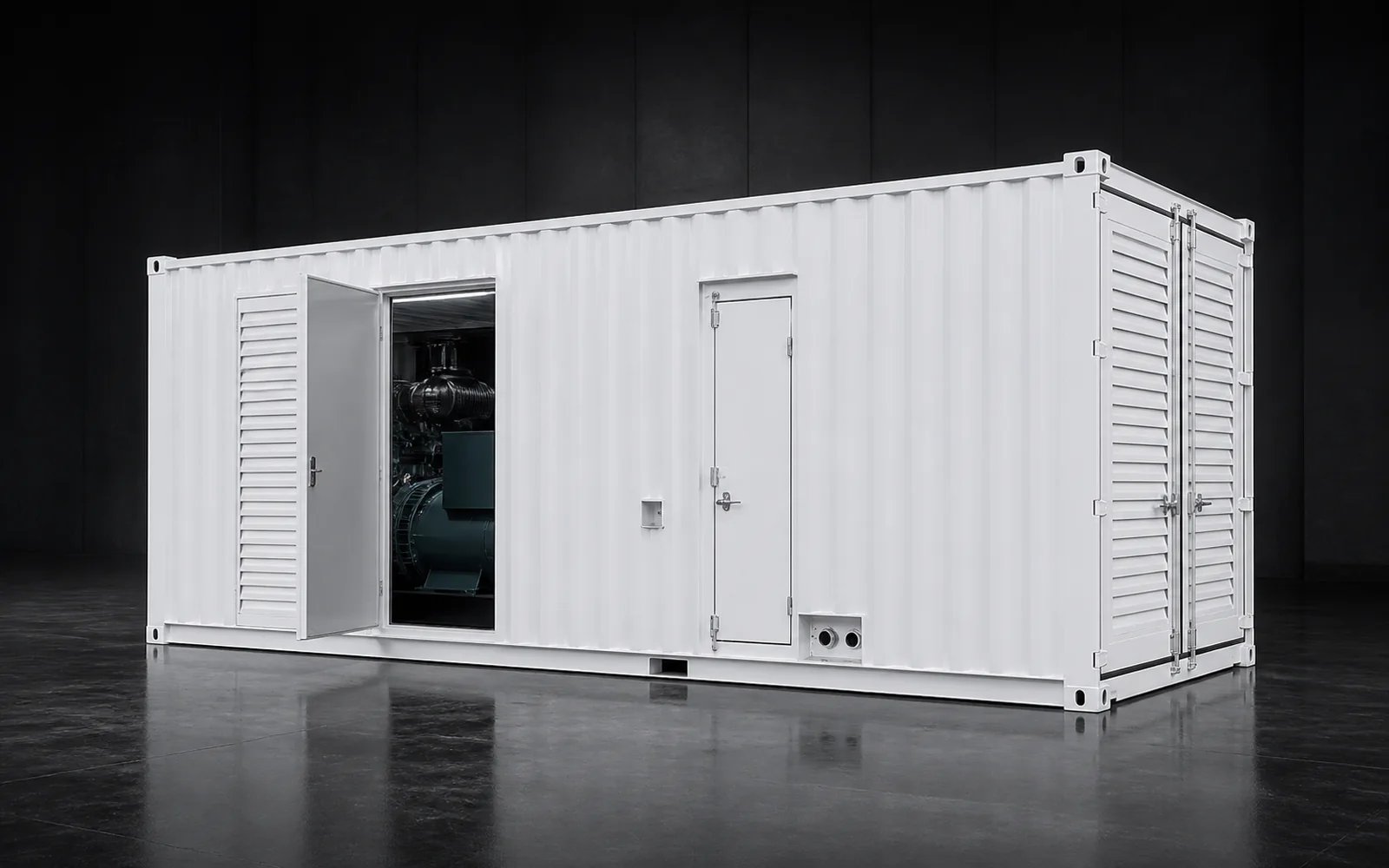
A hospital wing or a commercial building near occupied space needs a silent, weather-resistant enclosure so the set does not become the next noise complaint. See the silent diesel generator range: https://linkpowergenset.com/en/products/silent-diesel-generator/. Above roughly 900 kVA, or anywhere dust, heat and long runtime dominate, the containerized system wraps engine, radiator, tank and switchgear into one box built for harsh duty - the fit for large data halls and infrastructure. See containerized power systems: https://linkpowergenset.com/en/products/containerized-power-system/. The package is decided by where the set lives, not by how it looks in a brochure.
Controls and transfer are where reliability is won or lost
The generator is half the system. The automatic transfer switch moves the load from utility to generator without someone in the room. For critical sites, paralleling two or more sets gives N+1 redundancy: one unit can fail and the load still holds. Monitoring and remote alarm turn a black-box machine into something your facilities team can actually trust. Skipping the ATS and paralleling controls to save budget is the most common way a backup system fails on the day it is needed. See how critical loads map to applications: https://linkpowergenset.com/en/applications/hospital/ and https://linkpowergenset.com/en/applications/commercial-buildings/.
What to verify with the supplier before you sign
Do not take compliance on faith. Ask for the applicable emission stage certificate for your destination market, the factory acceptance test report with the load step you care about, the ingress-protection rating for the installation environment, and the documented noise level at the measuring distance your local limit uses. These are documents a serious manufacturer supplies on request; if they cannot, that is your answer. LINKPOWER prepares the technical selection, the FAT record and a project quotation from your load list, duty and site conditions - including the nearest service point and spare-parts lead time before you commit.
FAQ
How much runtime should a hospital backup generator have? Long enough to cover the outage plus the time to restore utility power or bring in mobile support - but the exact figure is set by your local code and your risk plan, not by a generic rule. Put the fuel-autonomy requirement in writing and confirm it with the supplier against the actual load.
Can one generator serve both a data center and a hospital? Only if they share the same criticality tier and transfer scheme, which is rare. Different tiers usually mean separate sets or at least separate bus sections with their own transfer and redundancy logic.
Do I need N+1 redundancy? If downtime has a hard cost - lost care, lost transactions - then yes, plan for one unit down while the load holds. The redundancy decision should follow your availability target, not the cheapest bill of materials.
What we need from you
Send the load list with critical tiers marked, the duty hours, the site layout and the local noise and emission limits. We will match the package, size the transfer and paralleling scheme, run the factory test against your step load, and return a project quotation - with the service footprint and spare-parts lead time stated up front.