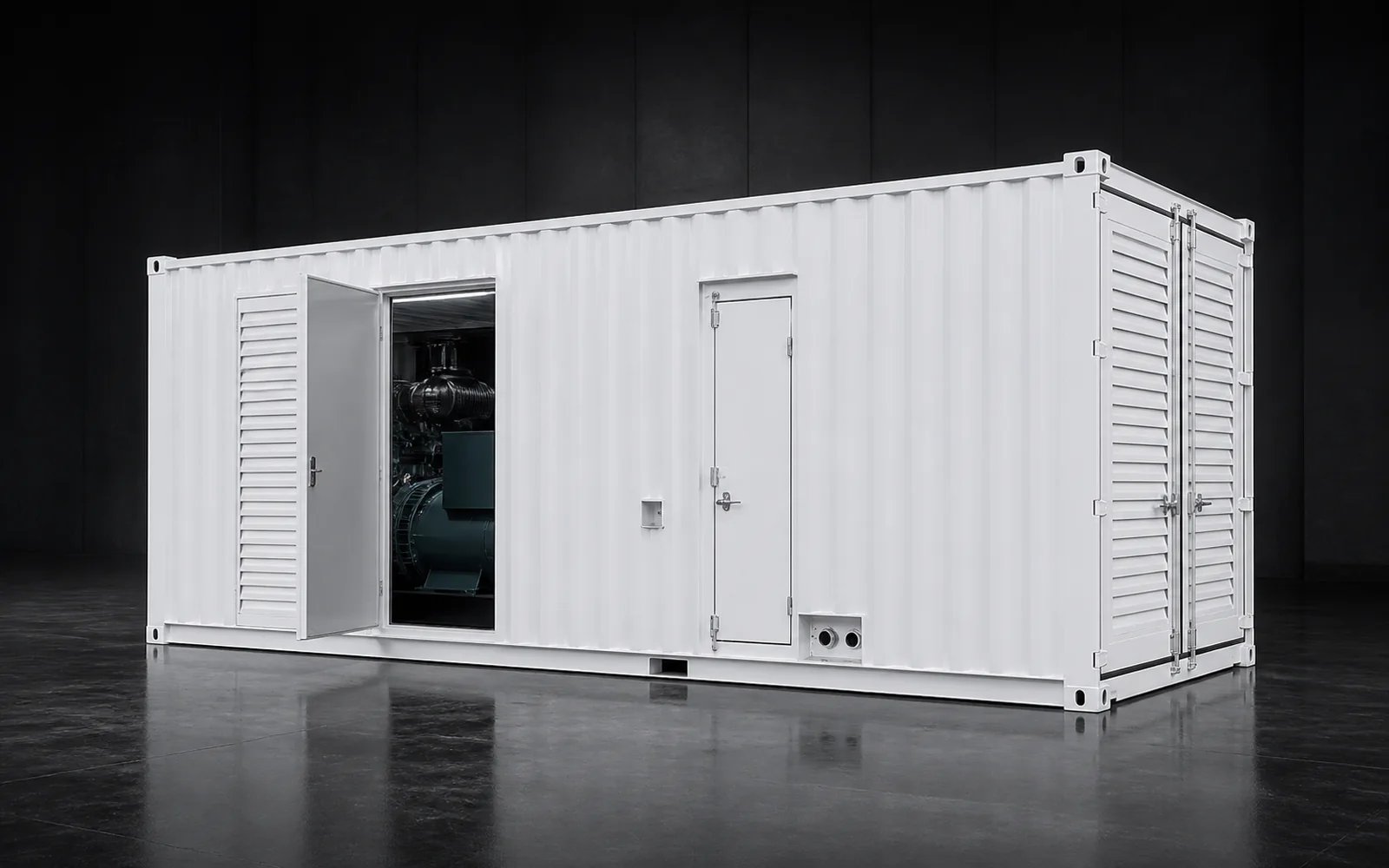
The market is shifting toward power that shows up pre-built and rolls into place, rather than power that gets assembled on a site over several months. This week Power Engineering International reported that Siemens will supply 1.7 GW of gas-turbine cores packaged as a 'hypermobile' power unit - the clearest signal yet that buyers want transportable, pre-integrated blocks they can commission in weeks instead of seasons. Diesel generator buyers have been able to get the same speed with two package types for years: containerized power systems and mobile trailer sets. This guide is for the person who has to put firm power on a site fast - what each option actually saves you, where each one gives up something, and the papers you should lock down before anyone signs.
What 'fast deploy' actually buys you
When the project clock is the real constraint, the win is moving work from the field to the factory. A containerized set ships with the generator, switchgear, fuel system and ventilation already built and load-tested as one unit, so site crews are laying a pad, running cable and fuel, not wiring a machine room from loose components. Mobile trailer sets go a step further: they arrive road-legal and self-contained, so a site can have power the day the truck is unloaded, then the unit moves to the next job. The trade is that neither is as cheap to service or as tightly packed as a permanent plant-room build, and a trailer set gives up some weather protection for its mobility. The buyer's first job is to decide how much of the project's risk sits in the schedule versus the budget, because that ratio is what points to one form or the other.
Containerized power systems: the fixed-but-fast option
A containerized unit is the answer when the set will stay put for years but you cannot afford a long on-site build. It drops onto a prepared concrete pad, connects to fuel and cabling, and the acoustic enclosure plus weatherproofing are already built in. That makes it a strong fit for mines, infrastructure sites, remote camps and any location where a permanent plant room would be slow or expensive to construct. Mines and infrastructure pages show where this form earns its keep: https://linkpowergenset.com/en/applications/mining/ and https://linkpowergenset.com/en/applications/infrastructure/. Specify the enclosure IP marking and the as-tested load report for the exact configuration, because a unit proved at the factory and a unit assembled on site are not the same machine. LINKPOWER builds and load-tests each containerized set at the factory and ships the as-tested report with it: https://linkpowergenset.com/en/products/containerized-power-system/ and https://linkpowergenset.com/en/factory/.
Mobile trailer generators: power that moves with the job
A trailer-mounted set earns its place when the load is temporary, moving, or simply uncertain. Construction phases, commissioning windows, events and disaster recovery all want power that appears and leaves without a civil-works package. The unit is road-legal, often with its own fuel tank and weather canopy, so deployment is a matter of positioning and cabling rather than construction. The cost is less acoustic control and more exposure than a container, and runtime is usually planned as standby or intermittent rather than continuous base load. For the buyer, the verification point is unchanged: confirm the trailer rating, the canopy protection and the as-tested figures, then match the duty to how the set will actually run. See the mobile option here: https://linkpowergenset.com/en/products/mobile-trailer-generator/.
Engines and the papers you must verify
Both package types run on the same engine decision, and most export buyers are comparing established platforms rather than chasing one brand. Weichai, Yuchai and SDEC engines are common across exported generator sets, and the real question is which one matches your duty, parts network and budget - not which name sounds best. Do not take emissions or compliance on trust. Ask for the applicable emission-stage document for your destination market - EU Stage V, US EPA Tier 4 or China NR-IV, whichever applies to where the set is installed - the IP protection marking for the enclosure, and the factory as-tested report, and write those requirements into the contract. The correct value depends on the market and the installation, so request it as papers to verify, not as a brochure claim. Engine pages for project comparison: https://linkpowergenset.com/en/products/weichai-diesel-generator/, https://linkpowergenset.com/en/products/yuchai-diesel-generator/, https://linkpowergenset.com/en/products/sdec-diesel-generator/.
Sizing the transportable set without overbuying
The temptation with a unit that arrives ready to run is to size for the worst case and pay for capacity you never use. Start from the actual duty - standby, prime or continuous - and the load profile, because a containerized unit rated for prime and a trailer unit rated for standby are specified very differently in cooling, fuel and service interval. LINKPOWER configures each project against the stated duty and site conditions instead of a catalogue number, which matters more for transportable sets because they are harder to re-rate once built. If you are unsure where your load falls between open, silent, trailer and containerized forms, the package-type overview lays the trade-offs side by side: https://linkpowergenset.com/en/products/ and https://linkpowergenset.com/en/applications/.
FAQ
How much faster is a containerized set than building a plant room? The set is built and tested at the factory, so on-site work shrinks to civil prep, fuel and cabling. The schedule driver becomes the pad, permits and interconnection rather than equipment assembly - start those in parallel with the order. Ask the supplier for the exact factory lead time and test scope for your configuration, because a generic estimate hides the real bottleneck.
Can a mobile trailer generator run continuous duty? It can, but trailers are usually specified for standby or intermittent duty because they trade some weather protection and acoustic control for mobility. If the set will run long hours at base load, confirm the rating and service interval with the supplier and match it to the real duty rather than assuming a trailer can replace a permanent installation.
Which emission stage applies to a transportable diesel set? That depends on the destination market and where the set is installed, not on a default the supplier quotes. Request the applicable emission-stage compliance document for your market and write it into the contract, then verify it against the as-tested report before acceptance.
Send us the duty, load profile, site constraints and the documents your market requires, and LINKPOWER will return a configuration - containerized or trailer-mounted, on Weichai, Yuchai or SDEC engines - with the verification papers and export plan stated up front. Because the sets are built and load-tested at our own factory, the as-tested report travels with the unit, so your commissioning crew works from the same numbers the machine was proved against. See the full range: https://linkpowergenset.com/en/products/.