In early October 2026, ContourGlobal broke ground on Project Sterling, a 509 MWp solar and 1.4 GWh battery plant spreading across more than 2,000 acres in Arizona's Mojave Desert, with construction running through 2028 and an average of around 400 workers on site. It is a useful reminder of a plain fact that gets lost in the renewables headlines: before any panel produces a watt or any battery charges, a build that size needs power of its own. Off-grid construction, remote access roads and early civils work run on temporary diesel generation, and the choices made there set the tone for the whole project. This guide covers how to specify construction-site generator power for jobs like this - and the verification points that keep a remote build from stalling.
Why a remote build runs on diesel before it runs on sun
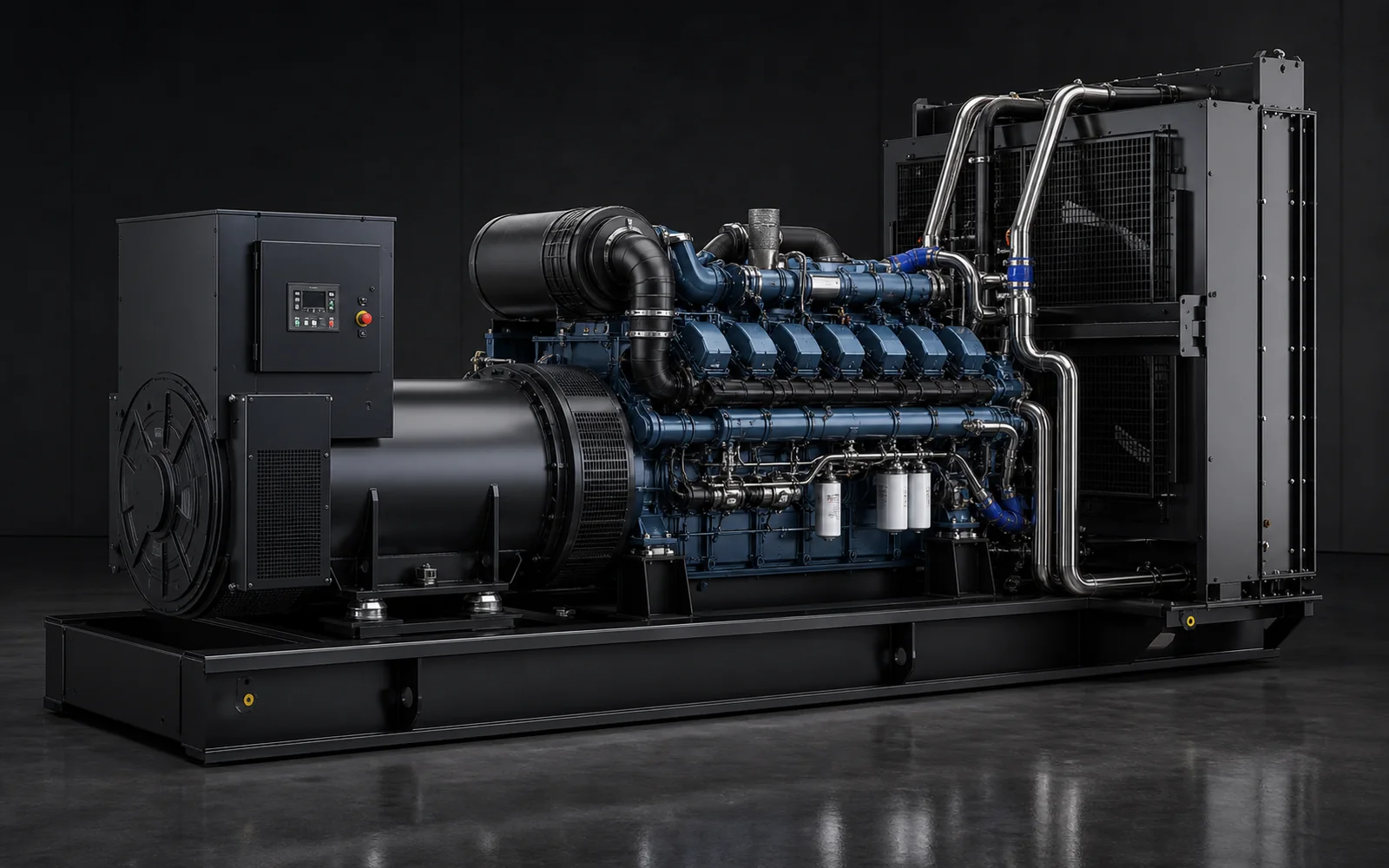
A 2,000-acre site an hour from the nearest town has no finished electrical room, no grid connection at the workface, and often no permanent road. Cranes, welders, lighting towers, concrete batching, office cabins and the pumps that keep dust down all need electricity from day one. That load is variable, hard on motors starting, and spread across a site that changes shape every few weeks. Diesel generator sets - sized as prime-power units rather than standby - are the practical answer, because they move with the work and do not depend on infrastructure that does not exist yet. For a buyer, the first decision is not the brand, it is the duty and the package: https://linkpowergenset.com/en/applications/construction/.
Picking the package that travels with the job
Four package types show up on construction sites, and the right one depends on what the site already provides. Open-type sets are cheapest and easiest to service, but they assume a ventilated, weather-protected space - fine inside a built plant room, unusual on a raw site. Silent (acoustic-enclosure) sets add weather protection and cut noise, which matters when the boundary sits near residences or an operating facility. Mobile trailer sets put the generator on a roadworthy chassis so you can reposition it as the work front moves, without a crane; for a spread-out civil works phase that mobility pays for itself weekly. Containerized sets package the generator with tank, controls and often a step-up arrangement in a standard box that drops on a flatbed and runs after a few cable connections - a common choice when the build will later become a permanent power asset. Match the package to how the site is laid out and how often the load moves: https://linkpowergenset.com/en/products/mobile-trailer-generator/ , https://linkpowergenset.com/en/products/open-type-generator/ , https://linkpowergenset.com/en/products/silent-diesel-generator/ and https://linkpowergenset.com/en/products/containerized-power-system/.
Dust, heat and altitude: the conditions that change the rating
Desert sites are unforgiving. Fine dust works into air intake and cooling fins, high ambient temperature derates the engine and alternator, and a site at altitude loses output compared with a sea-level nameplate. None of this is a reason to avoid diesel; it is a reason to size from the site, not from the catalogue. Ask the supplier for the derating curve at your maximum ambient temperature and altitude, and for the intake filtration grade suited to the local dust load. The same verification discipline applies to the things buyers often assume: the ingress-protection rating the enclosure actually carries, the as-measured noise figure at the enclosure and at the site boundary, and the emission-stage certificate required for your market and project. Request those documents up front and write the requirements into the contract - a verbal 'it meets local rules' is not a compliance record. The full generator range, by power band, is here: https://linkpowergenset.com/en/products/.
Fuel autonomy and the logistics of a long build
A multi-year build with hundreds of workers does not tolerate a fuel run-out on Friday afternoon. Fuel autonomy - how many hours the set runs before refill - drives both uptime and the delivery schedule of tanker trips across a remote road. Size the day tank and any bulk storage from the expected load and the realistic refill interval, not from the supplier's standard tank. For a site like Project Sterling, where civil works, road building and module installation overlap for months, a larger base tank or a dedicated fuel farm on trailers often beats a string of small sets each needing their own top-up. Put the fuel plan in the RFQ alongside the electrical spec, and ask how the supplier packages fuel storage for a mobile or containerized set: https://linkpowergenset.com/en/products/containerized-power-system/.
What to put in the RFQ for construction power
A construction-power RFQ should state the duty (prime, because the set runs for long periods), the expected load profile with the largest motor starts, voltage and frequency, the site ambient and altitude, the required noise limit at the boundary, the fuel autonomy target, and the documentation the project demands (emission stage, IP rating, test records). Specify the package you want - open, silent, trailer or container - and ask the supplier to confirm the configuration and run the set under load before it ships. Sets that are built, wired and load-tested as complete units at the factory arrive as known quantities rather than puzzles: https://linkpowergenset.com/en/factory/. A clear RFQ is also what lets you compare two quotations on the same basis instead of reading two different machines.
FAQ
Do I need a different generator for construction than for backup? Usually yes. Backup (standby) sets run rarely and for short periods; construction sets run as prime power for long hours and carry motor-starting loads every day. The duty rating, cooling, filtration and service interval all scale with that, so size the construction set as a prime unit and confirm the maintenance plan for high-hour running.
Open, silent or trailer - which is cheapest? Open is cheapest to buy and service but assumes a protected space; trailer costs more but saves crane and repositioning time on a moving site; silent costs more than open but covers noise limits without a building. The 'cheapest' depends on whether your constraint is budget, noise, or how often the load moves - state that constraint and the package answers itself.
How do I keep a desert site compliant and reliable? Treat the environmental ratings as contract items, not catalogue claims: get the derating curve for your temperature and altitude, the dust-grade filtration, the IP rating and the emission-stage certificate in writing, and require a factory load test with your actual configuration. Verified documents and a witnessed test prevent most remote-site failures.
Planning temporary power for a large or remote build? Send LINKPOWER the site conditions, the load profile and the duration of the work, and you get a construction-power configuration - open, silent, trailer or containerized sets on Weichai, Yuchai or SDEC engines - sized for your ambient and altitude, fuel-planned for the refill log, and load-tested before it leaves the factory. Export documentation and on-site commissioning support are quoted up front. Start from the applications overview to see how similar sites are powered: https://linkpowergenset.com/en/applications/ and https://linkpowergenset.com/en/applications/construction/.