Diesel generators are built to run when the grid fails, but cold is the one condition that quietly undermines them before they are ever needed. Below about 0 degC, diesel starts to thicken, batteries lose cranking power, and coolant can freeze solid. If your set sits in a cold region - a northern mine, a winter construction site, a remote telecom site - the time to prepare it is autumn, not the first hard freeze. Here is what cold-weather readiness actually involves.
Fuel: stop the wax before it forms
Diesel clouds and gels as temperature drops; the exact point depends on the fuel grade and its wax content. A gelled tank will not flow to the injectors, and no amount of cranking fixes it. Use the winter grade specified for your climate, keep tanks topped to limit condensation, and confirm with the supplier that the fuel and any treatment are rated for your lowest expected temperature. For sets in harsh climates, ask whether the package includes a heated fuel line or a fuel-water separator heater as standard, not as a costly afterthought.
Batteries and starting
A lead-acid battery loses a large share of its cranking amps near freezing, and a weak battery is the most common reason a generator fails to start on the day it is needed. Size the starting battery for the cold cranking requirement, keep terminals clean, and confirm the charger holds the battery at float through the cold season. For remote sets that sit unused for weeks, a battery maintainer or a thermostat-controlled block heater beats a desperate jump-start in a snowstorm.
Coolant, block heater and the engine itself
Use the antifreeze rated for your minimum ambient, not a generic mix, and verify the concentration against the spec rather than guessing. A coolant or block heater keeps the engine warm enough to start and to avoid thermal shock when it accepts load. Confirm the heater rating and the thermostat setpoint with the supplier, and have the set exercised under load before winter - a generator that only idles in a warm room has not proven it will start cold.
The package matters more than the label
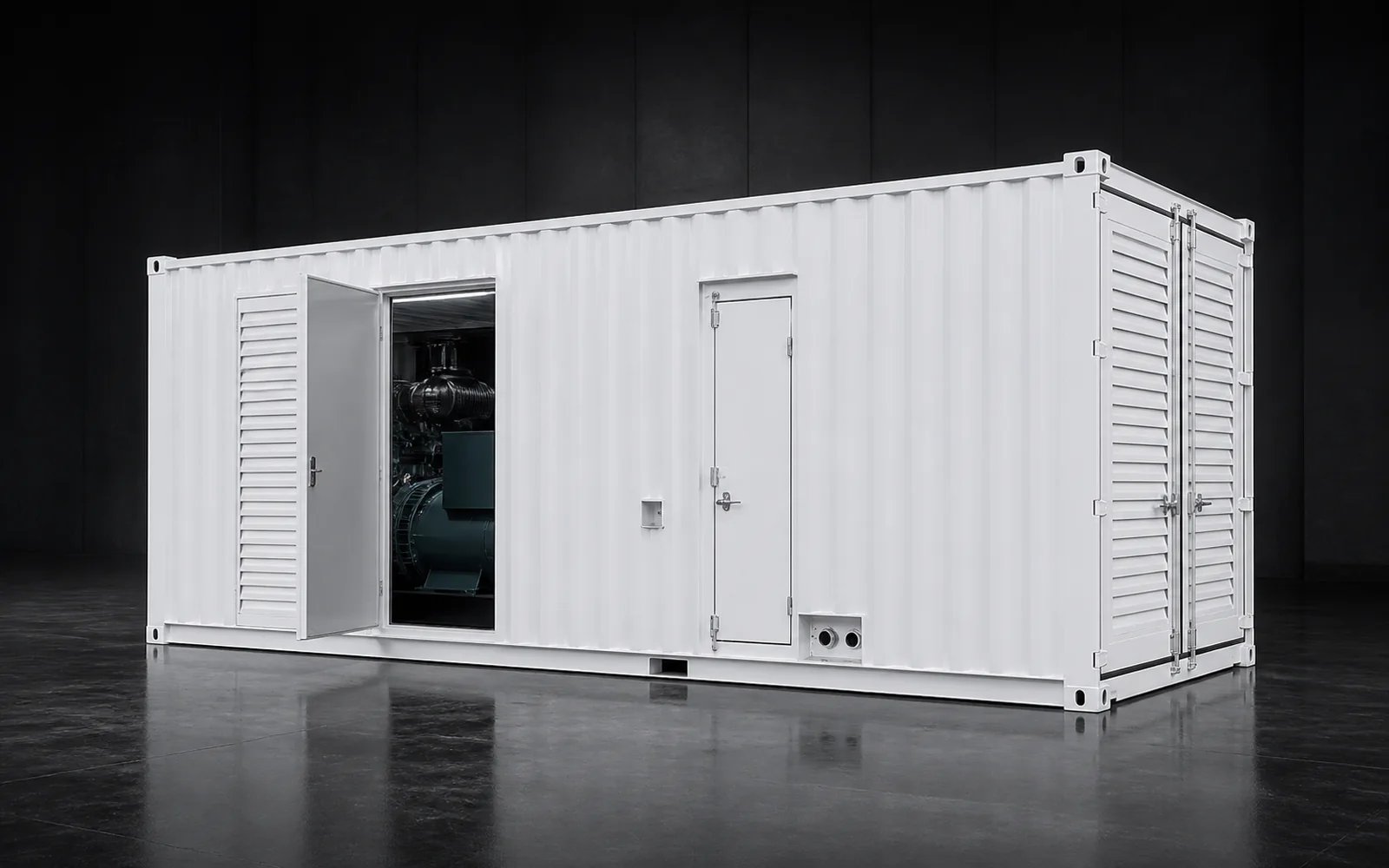
Open sets in an unheated room will not survive a hard freeze; they rely on the building's heating, which may also fail during the very outage the generator exists to cover. Silent and containerized packages can be specified with internal heating, insulated enclosures and cold-weather battery options - the right choice for mines, infrastructure and remote industry. See containerized power systems: https://linkpowergenset.com/en/products/containerized-power-system/ and silent diesel generator sets: https://linkpowergenset.com/en/products/silent-diesel-generator/. For fixed plant rooms that are already conditioned, open-type sets stay valid: https://linkpowergenset.com/en/products/open-type-generator/. See how cold sites map to applications: https://linkpowergenset.com/en/applications/mining/ and https://linkpowergenset.com/en/applications/infrastructure/.
What to verify with the supplier before winter
Do not assume a tropical-spec set will behave in a Nordic or Siberian winter. Ask for the cold-start rating and the lowest starting temperature the engine is warranted for, the block and coolant heater specifications, the battery cold-cranking amps, and the fuel grade recommendation for your region. These are questions any serious manufacturer answers with figures, not vague reassurance. LINKPOWER prepares the cold-climate configuration - heaters, insulation, battery and fuel specification - from your site's lowest expected temperature and duty, and states the starting envelope before you commit.
Prove it before the cold does, not after. A generator that idles in a heated shop has not earned its rating; the real test is a loaded run at temperature. Ask the supplier for a load-bank or cold-start test report tied to your stated starting envelope, and for sets bound for harsh sites, specify the exercise schedule and the monitoring that flags a weak battery before it strands you. LINKPOWER runs each set under load as part of factory acceptance and states the cold-start result in the handover, so the figure on the quotation is the figure the set actually met.
Roll these into the purchase specification so the supplier answers in figures rather than reassurance: fuel grade and treatment for your lowest expected temperature, battery cold-cranking amps with the charger float setting, block and coolant heater ratings with their setpoints, antifreeze concentration against the minimum ambient, and a loaded cold-start or load-bank test written into acceptance. A one-page checklist turns cold-weather readiness from a hope into a contract item.
FAQ
At what temperature does diesel start to gel? It depends on the fuel grade and wax content, not a single number - confirm the cloud point and pour point for the grade specified for your region, and keep the tank topped and treated for the cold season.
Do I need a block heater? If the set must start reliably below freezing and may sit unused for days or weeks, yes - a thermostat-controlled block or coolant heater is the single most reliable cold-start aid. Confirm the rating with the supplier.
Can a containerized set run in extreme cold? Yes when specified for it: insulated enclosure, internal heating, cold-rated battery and fuel. The key is ordering the cold-climate package up front rather than retrofitting after the first failure.
What we need from you
Send your site's lowest expected temperature, how often the set runs, and the duty hours. We will specify the heaters, insulation, battery and fuel grade, exercise the set under load in a cold-start check, and return a project quotation - with the service footprint and spare-parts lead time stated before you order.